

From grave to shepherd’s refuge
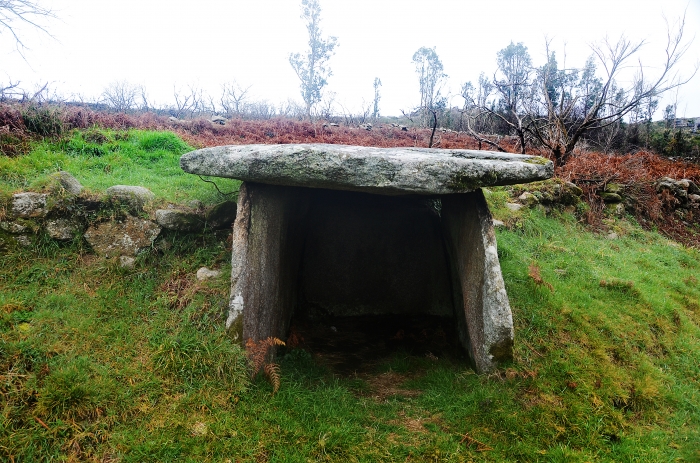
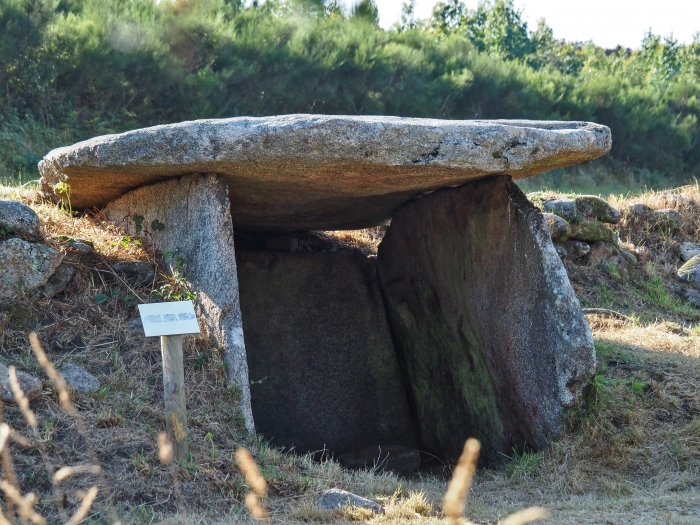
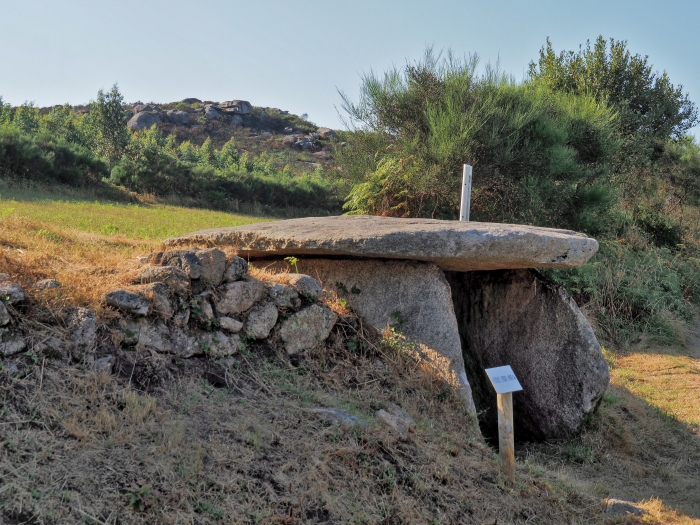
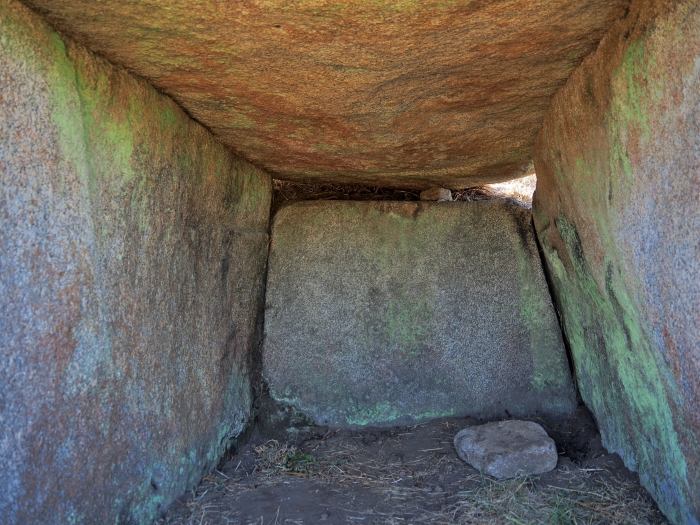
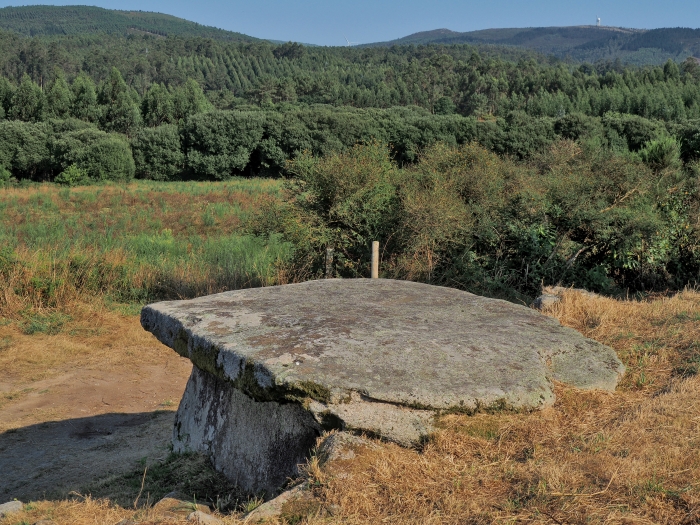
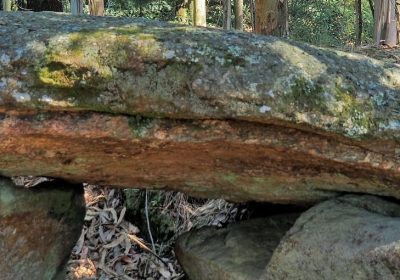
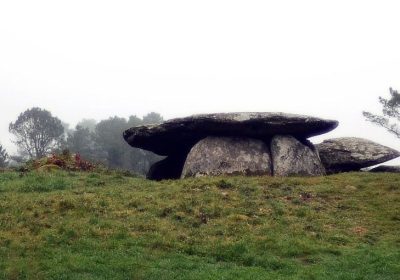
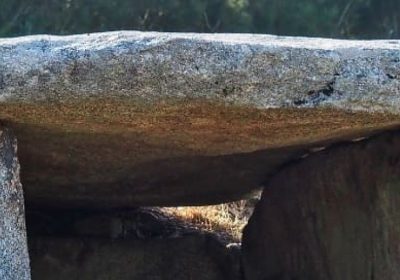
The particular shape of the Casota de Freáns meant that for many years the shepherds used it as a refuge to protect themselves from the inclemency of the weather. In fact, it is an atypical dolmen since it has no chamber, no corridor, no earth mound. Its structure is very similar to the Fornela dos Mouros (Laxe) because it consists of three vertical granite slabs on which a horizontal one rests that serves as a roof or roof, forming a kind of hut.
The characteristics of the megalith are reminiscent of later megalithic cists and could be dated to the early Bronze Age, as early as the second millennium BC. These monuments would have functioned as individual burials and typically lacked the monumentality of large corridor dolmens.
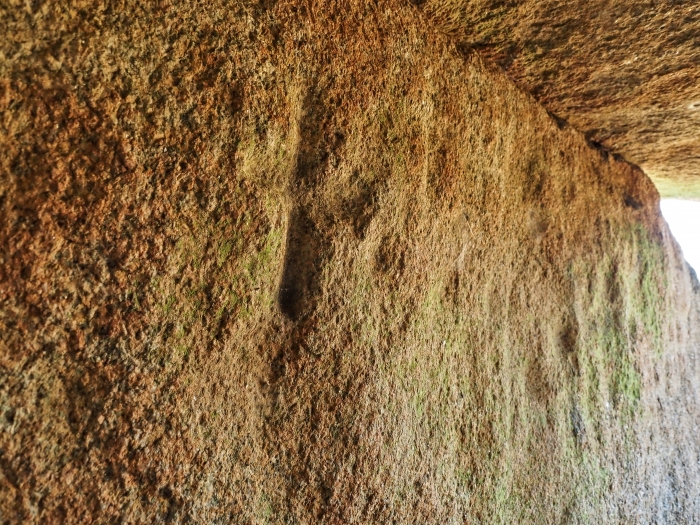
Inside the Casota, on the vertical slabs, several engravings based on crosses and “bowls” can be seen quite clearly. The meaning is not clear, although some authors have related these “bowls” to the representation of constellations of stars. This hypothesis is quite controversial today, but the link between dolmens and astronomical phenomena is clear. Perhaps the most obvious is the orientation of the corridors and accesses of the vast majority of the monuments of Western Europe towards the southeast in relation to the sunrise and sunrise.
A Casota de Freáns is located on the eastern slope of Monte Pedrouzo. On the opposite side of this hill, about 500 meters from the dolmen, several sets of petroglyphs with bowls, concentric circles and other motifs that could be related to the megalith were found in 2004. Through the Vieiro Fidalgo hiking route you can complete the visit with this set of rock art.