

Costa da Morte, located in the northwest of Galicia, is known for its natural beauty, but also for its rich historical and archaeological heritage. This corner of Galicia’s geography is dotted with remains that tell the story of our ancestors’ lives.
Although the humidity and the acidity of the soil have not allowed the preservation of bone remains for a long time, there are still abundant archaeological remains from the beginning of the 4th millennium B.C., with the first dolmens. There is also a large presence of forts and petroglyphs.
In this article we will tell you a little about the prehistoric culture of the area and take you to some of the best preserved forts and prehistoric monuments of the Costa da Morte.
Castros de Costa da Morte
These fortified settlements were intended to protect a territory that for its inhabitants was of agricultural, livestock or mining interest. In Costa da Morte there are many fortified settlements throughout the territory.
There are some on the summits of mountains that facilitate their defence, such as Mount Aro (Mazaricos), Xansón hillfort (Moraime, Muxía), Mount Croado (Carnés, Vimianzo), Lume de Suso hillfort (Castro, Coristanco) or Coto do Castro (Artes, Carballo).
Others are located on hillsides or flat land, such as Mintiráns (Caberta, Muxía), As Barreiras (Vimianzo), Nemeño (Ponteceso) or Cances (Carballo). The vast majority are located on hills, such as Mallou (Carnota), A Rega (Camariñas), A Croa do Castro (Cerqueda, Malpica), Oca (Coristanco) or Montes Claros (Vilaño, A Laracha).
Finally, they are all located on the coast, which take advantage of the cliffs as a natural defence, as in the case of the castro of Punta Galeana (Vilanova, Malpica), Merexo (Ozón, Muxía) or the one on the islet of O Castelo or Herboso (Touriñán, Muxía).
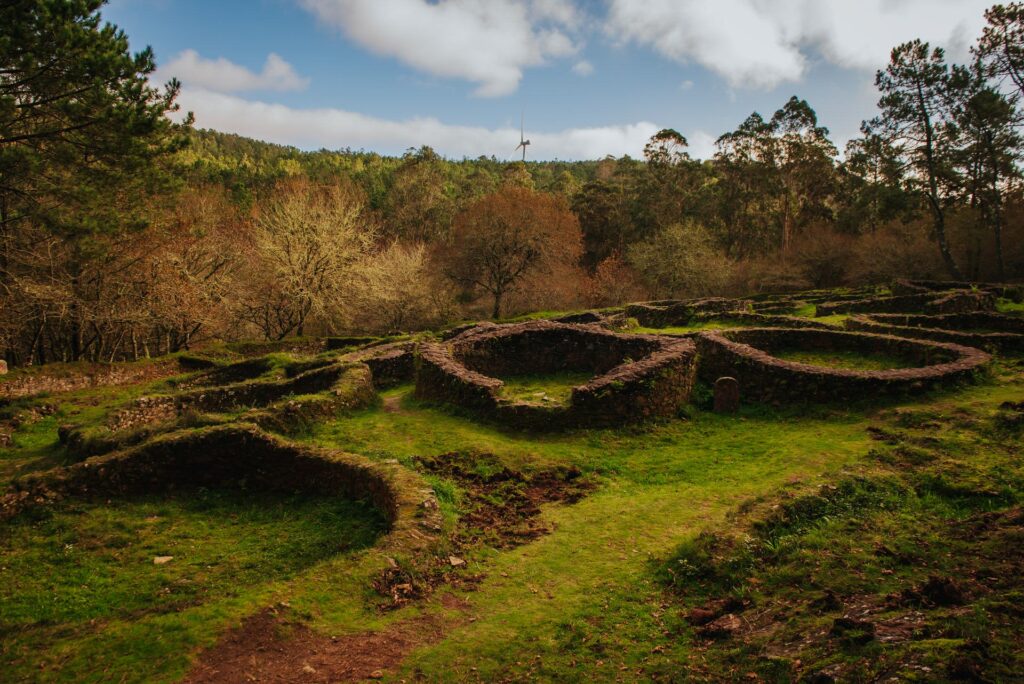
Castro de Borneiro, Cabana de Bergantiños
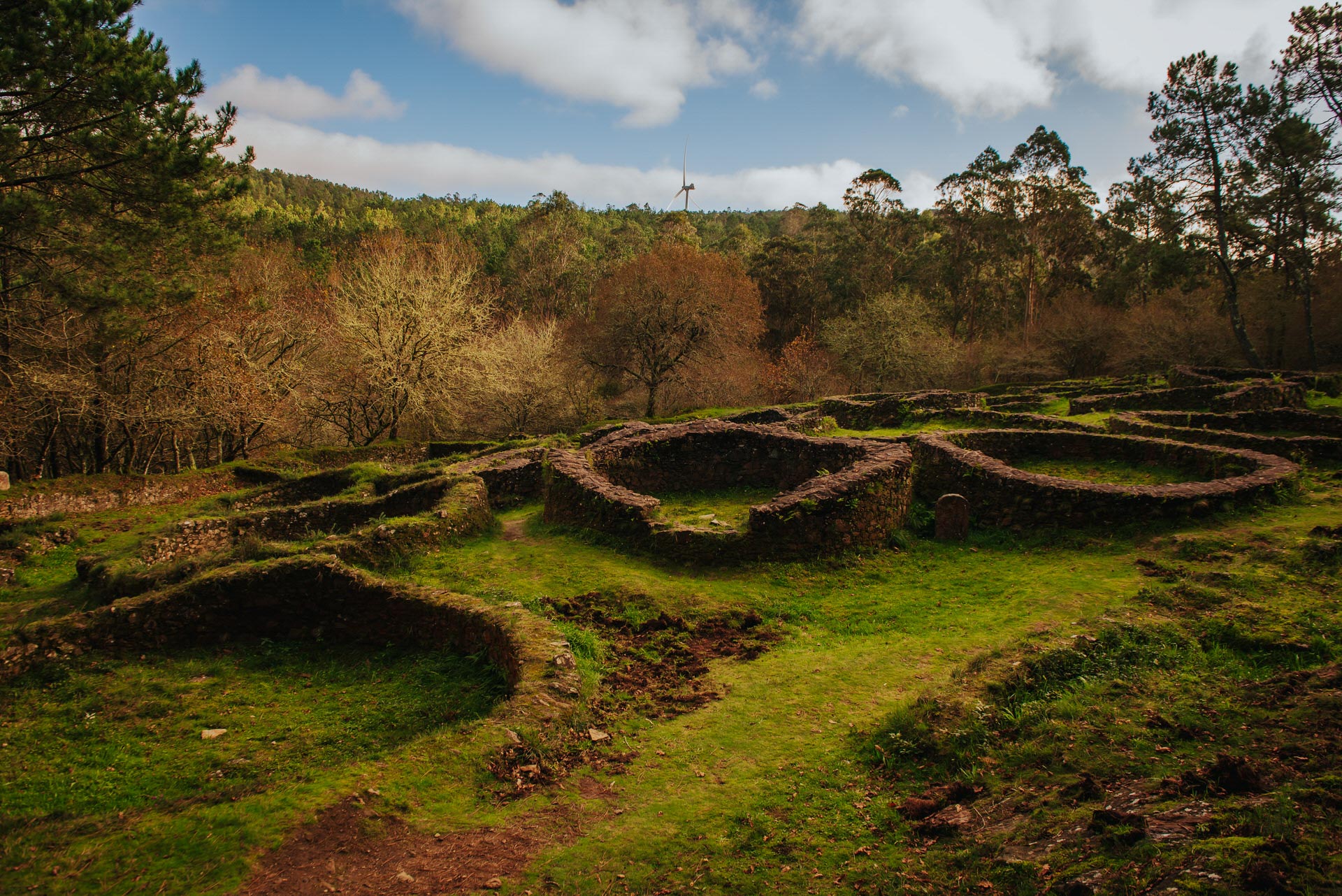
This fortified settlement is one of the best-preserved sites in Galicia. Discovered in 1924, with an occupation dating back to the 4th century BC. The circular stone-built dwellings, the defensive walls and a fountain that supplied water to the settlement stand out.
There is also an area known as the Barrio Extramuros, where some constructions can be found, including a furnace that may have been used for smelting metals. Remains of bronze objects were found: fibulae, rings, needles or balls and also iron.
Castro de Borneiro is open to the public and has information panels explaining its history and archaeological finds. It is surrounded by a natural environment that invites you to explore, ideal for those seeking to combine history and nature.
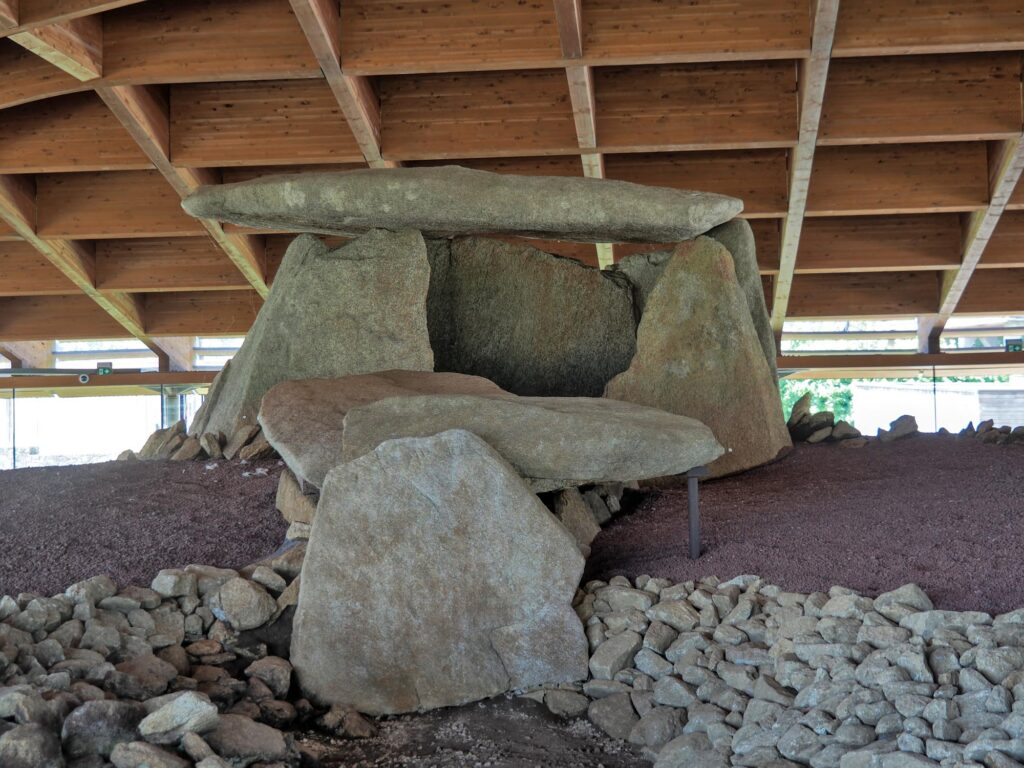
Dolmen de Dombate, Cabana de Bergantiños
Considered the ‘cathedral of Galician megaliths’, this dolmen is one of the most important in Galicia. Also located in Cabana de Bergantiños, it is estimated that it was built more than 4,000 years ago, in the Neolithic period. Its interior paintings stand out, which have been replicated in a protective structure built to preserve the original monument.
The Dombate Dolmen has an interpretation centre where visitors can learn about its history and archaeological context. Guided tours are also available for those who wish to delve deeper into the details.
Other prehistoric monuments in the territory
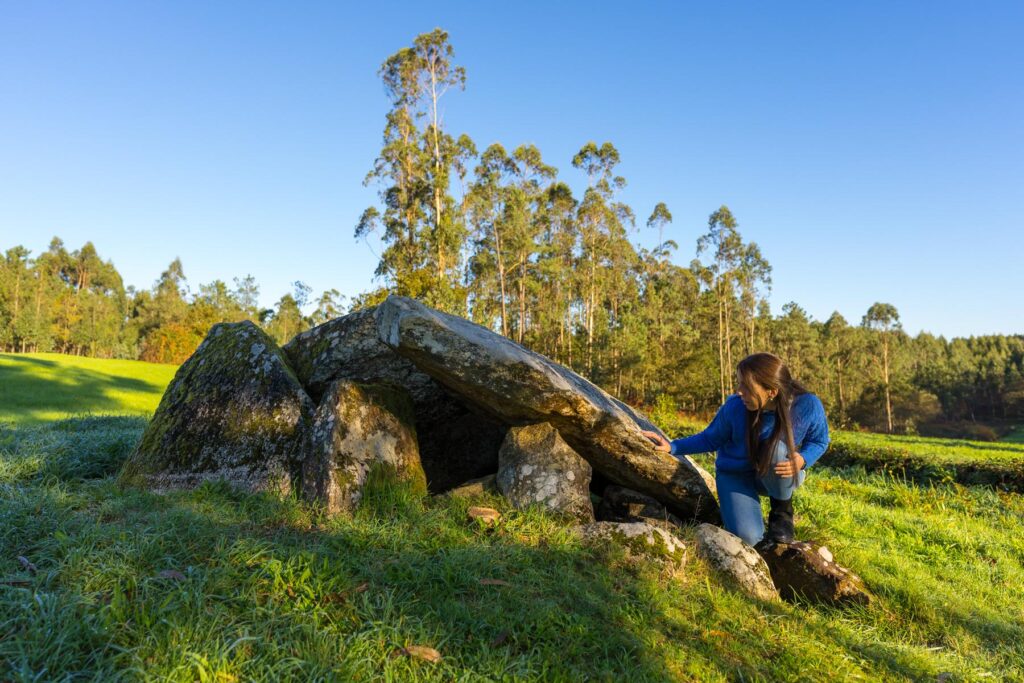
The dolmen of Dombate is one of the best preserved, but there are more than 600 megalithic sites on the Costa da Morte, including mámoas and dolmens.
Some of them are Pedra da Arca (Cerqueda, Malpica de Bergantiños), Pedra da Arca or Casa dos Mouros (Baíñas, Vimianzo), Pedra Cuberta (Treos, Vimianzo).
In the municipality of Vimianzo there is the Route of the Dolmens. It can be done by car in about three and a half hours and covers nine of these jewels.
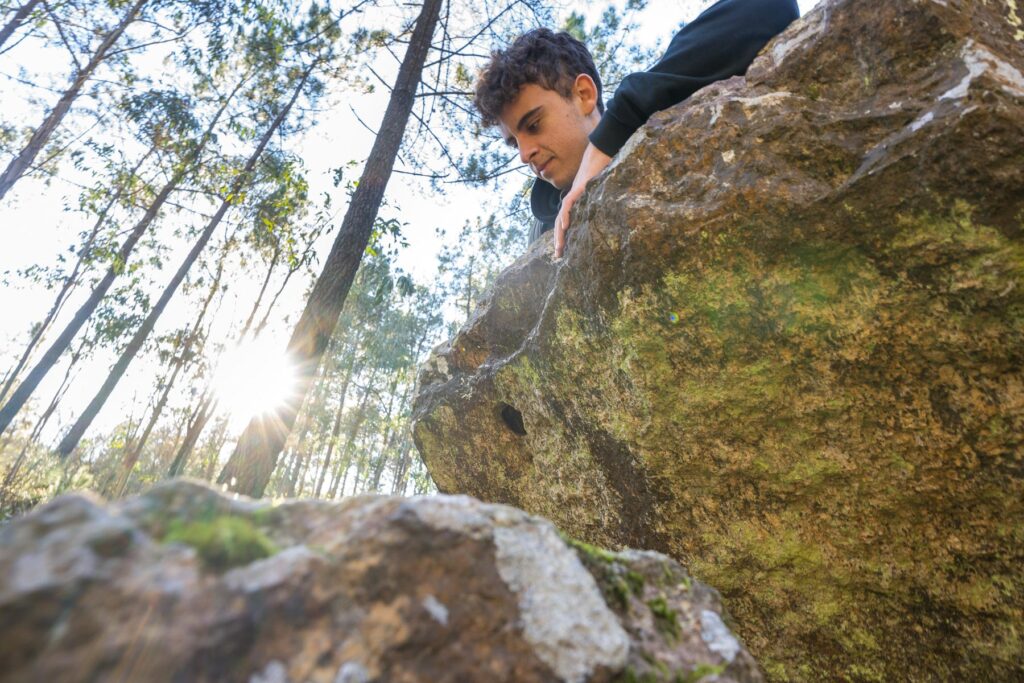
Later, collective burials were replaced by smaller structures called cists, for individual burials, such as the one discovered at Taraio (Cerqueda, Malpica), now in the Archaeological and Historical Museum of O Castelo de Santo Antón in A Coruña.
In addition to dolmens and cists, other constructions, such as menhirs, are also included in this megalithic period. The Marco da Anta menhir, in the parish of Erboedo, is preserved in the municipality of A Laracha. It is 2.05 m high and its base measures 74 cm in circumference.
Visiting the forts and dolmens of the Costa da Morte is more than just a simple excursion: it is a journey back in time that allows us to better understand the cultural roots of Galicia. It is also a privilege to be able to find places like these preserved and to be guided by listening to the history of those who lived here thousands of years ago.
If you decide to visit any of these prehistoric monuments and upload photos to Instagram, tag us on the account @visitacostadamorte where you can also be inspired by those who have already felt the magic of this space before.