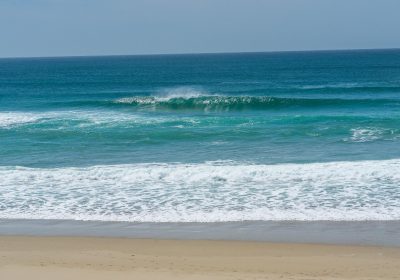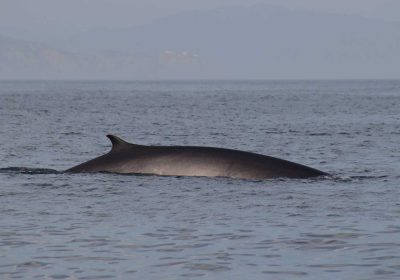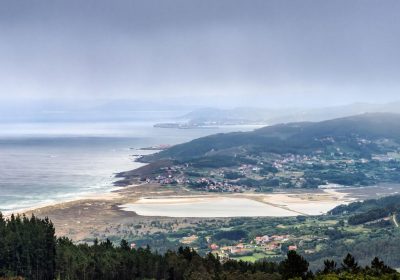


The Costa da Morte is much more than a destination of wild nature and endless beaches. Its history is linked to the sea and marked by tales of shipwrecks, lost sailors and other legends that have been passed down from generation to generation. Here, the Atlantic not only shapes the coastline with its waves, but also the collective memory of those who have inhabited this territory for centuries.
1. The origin of its name: between reality and legend
The Costa da Morte is not so called by chance. This stretch of the Galician coastline, which stretches along hundreds of kilometres of unforgiving coastline, has witnessed countless shipwrecks throughout history. Its rough waters and towering cliffs have tested sailors throughout the ages, making it one of the most dangerous sailing areas in Europe.
Tales of shipwrecks and lost ships have fuelled the legend that this coast is a place where the ocean takes its toll, giving rise to stories of ghost ships and wandering souls seeking their eternal rest.
Another version, which can be consulted in the museum of Cabo Vilán, in Camariñas, tells that many centuries ago, it was the Phoenicians who coined the name Costa da Morte to this area of the Atlantic to dissuade traders. In this way, they could increase the economic power of their empire in the Mediterranean.
2. The Holy Christ of Fisterra: a Christ who came from the sea
Another fascinating story of the Costa da Morte is linked to the Santo Cristo de Fisterra.
From the 14th century onwards, it is said that fishermen in the area saw a ship in the middle of a storm that was not moving forward, as if it was anchored. The fishermen saw a box being thrown into the sea from the boat, after which the boat was able to continue sailing. In this box was none other than an image of the Holy Christ attributed to Nicodemus.
This led to a great devotion to this image, which is frequently visited and celebrated by the faithful, especially during Holy Week.
3. The wreck of the HMS Serpent: the tragedy that made history
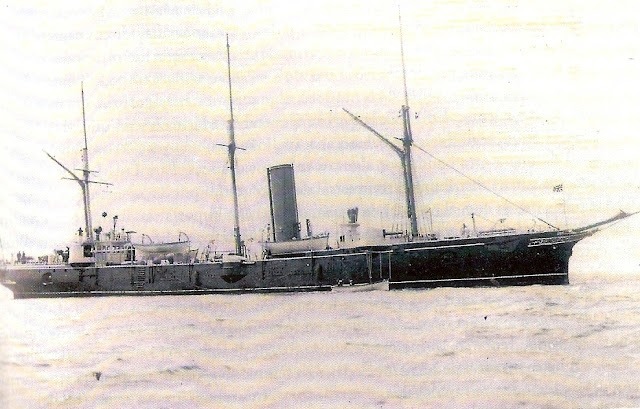
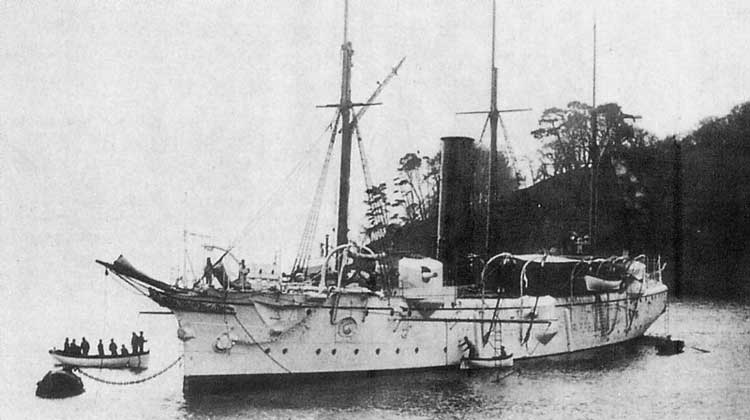
This is one of the best known shipwrecks on the Costa da Morte. That of the HMS Serpent, a British Navy ship that sank in 1890 near Punta do Boi, in Camariñas. Of the 175 crew members, only three managed to survive.
The bodies of the sailors were buried in a cemetery improvised by the locals, known today as the Cementerio de los Ingleses (Englishmen’s Cemetery). We are talking about a place very punished by the sea, with great storms, especially in winter, during which, when the wind rises, implacable, it is confused with sounds that seem to come from a tragic past.
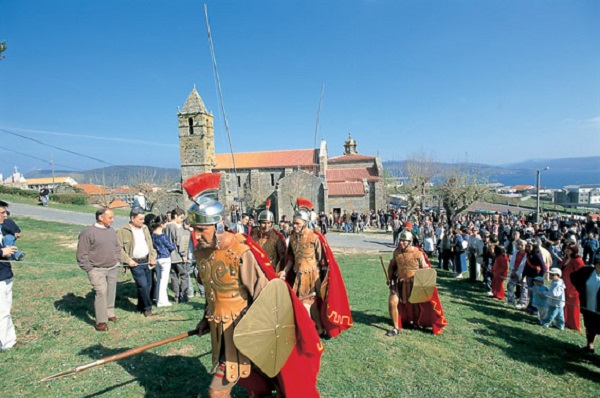
4. The legend of the Virxe da Barca in Muxía
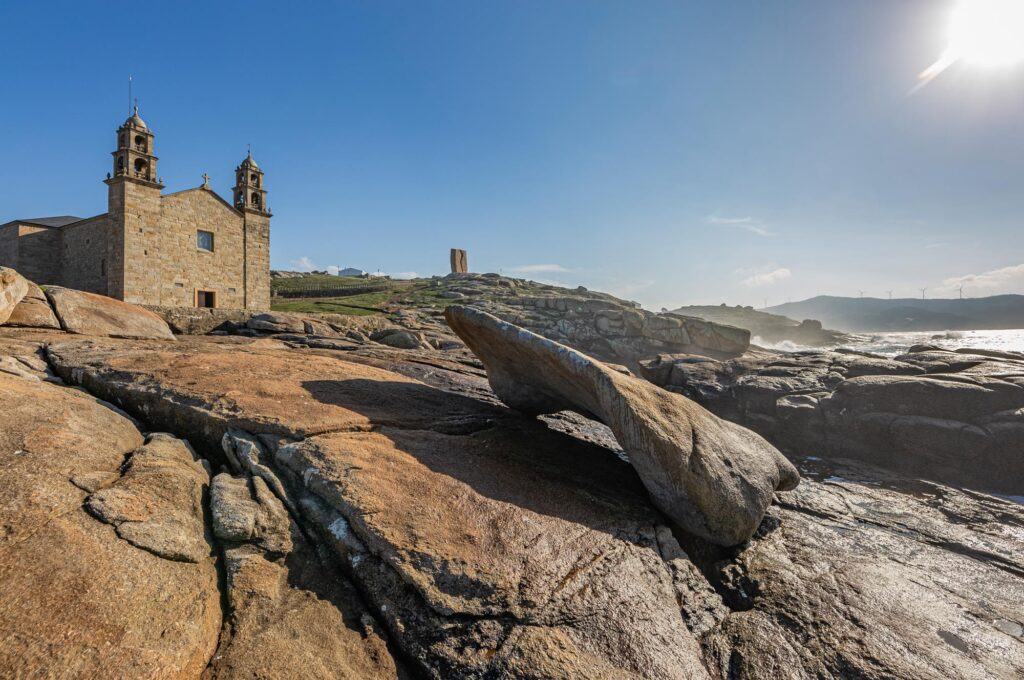
Another legend associated with religion and one of the most emblematic stories of the Costa da Morte. It is said that the Virgin arrived at this place, where today the Sanctuary of Nuestra Señora de la Barca is located, in a stone boat to encourage the Apostle Santiago in his evangelising mission and to tell him that he would have to return to the Holy Land immediately, although he would return to Galicia, but that he would do so after his death.
The stones that can still be seen today next to the sanctuary of the Virxe da Barca would be the remains of that miraculous vessel. It is said that the Pedra de Abalar (one of the most famous), when touched, left the person free of sin. It is also said to sway according to circumstances and to foreshadow events. Other famous stones are the Pedra dos Cadrís, with healing properties.
5. The legend of Laguna de Traba
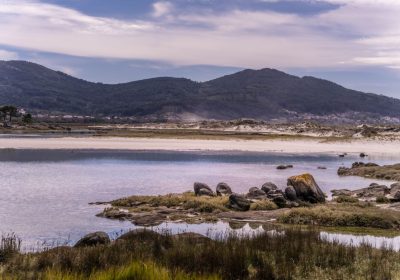
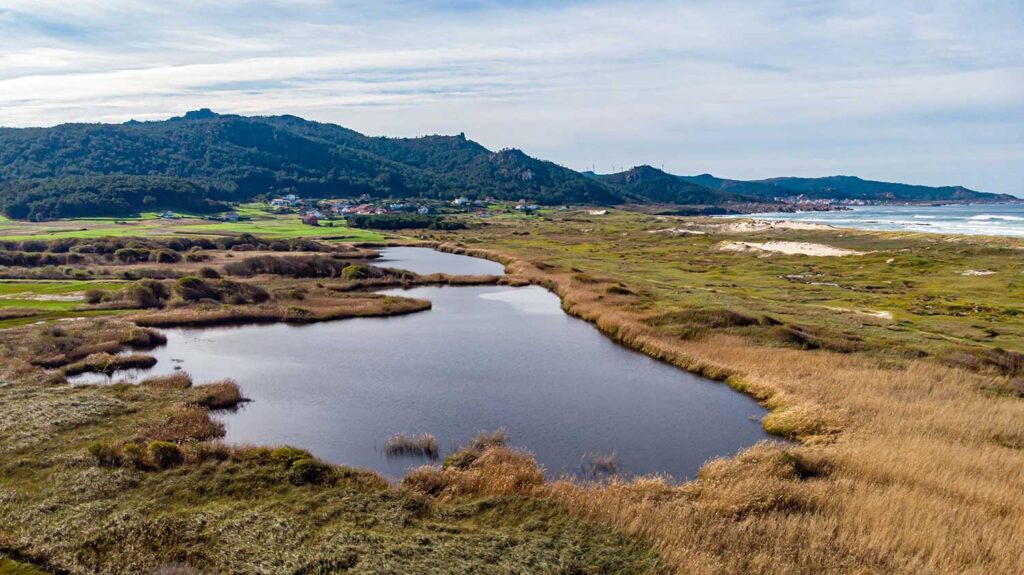
This legend is associated with the unique natural environment of Traba beach, with its dune system and lagoon. It is a place full of fauna at the foot of the Penedos de Pasarela and Traba. According to legend, there is a submerged city under the lagoon and, on stormy nights, it is possible to hear the bells of the parish church.
It is also said that it was the Apostle James who was responsible for the submergence of the village, because during his evangelisation, when he arrived in this village dressed as a beggar, he received no help from the villagers.
Discover the Costa da Morte with a different perspective
As you can see, the Costa da Morte is not only a place of breathtaking landscapes, but also a place where history and mythology intertwine. If you want to know more about its past and its legends, don’t hesitate to visit its fishing villages, the Cemetery of the English or the sanctuary of Muxía.Do you want to discover these mysteries for yourself? On our website you will find information about routes, visits and experiences to get to know the Costa da Morte from a unique perspective. Let yourself be surprised by its magic!