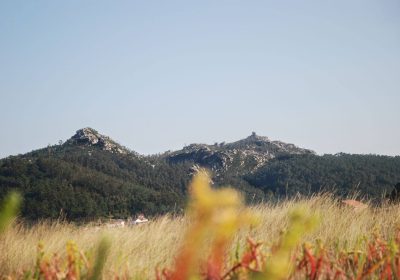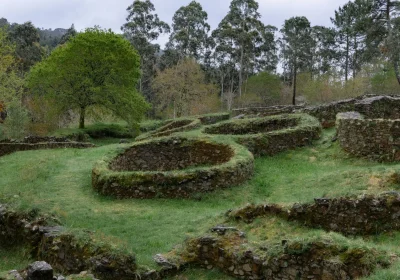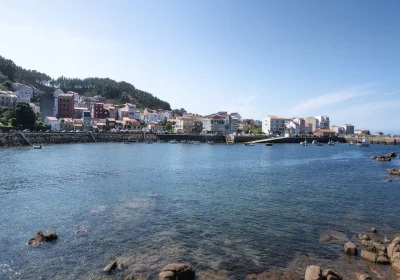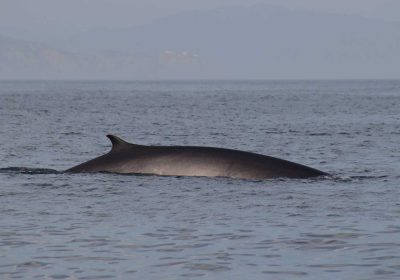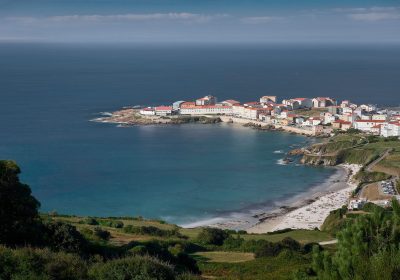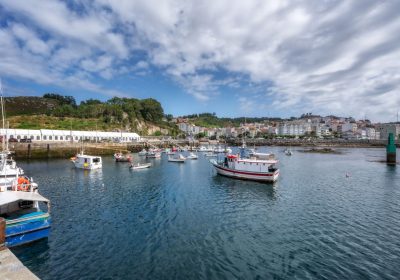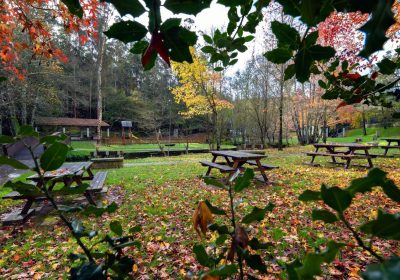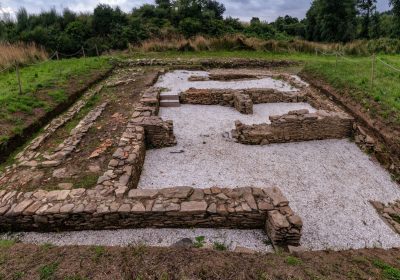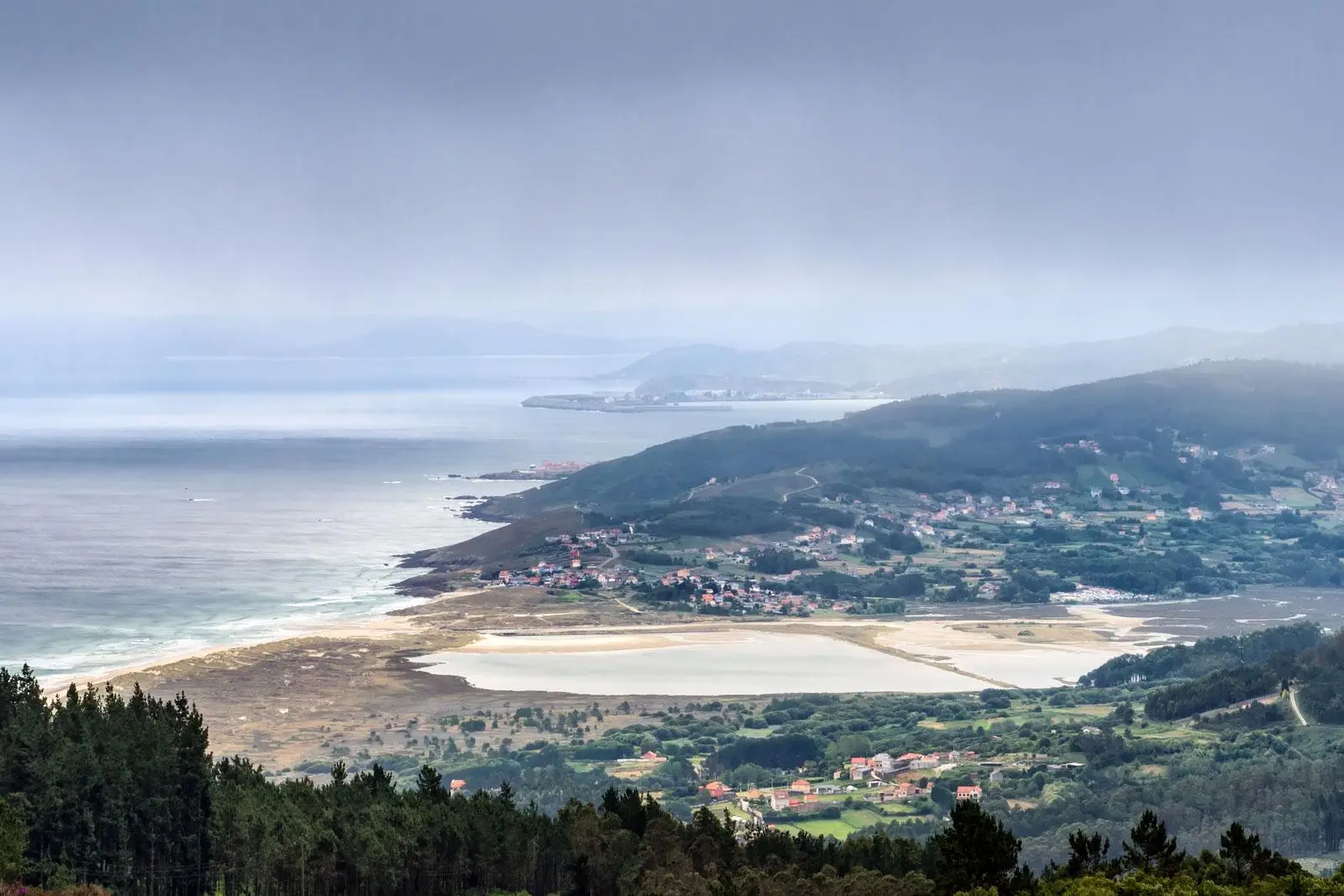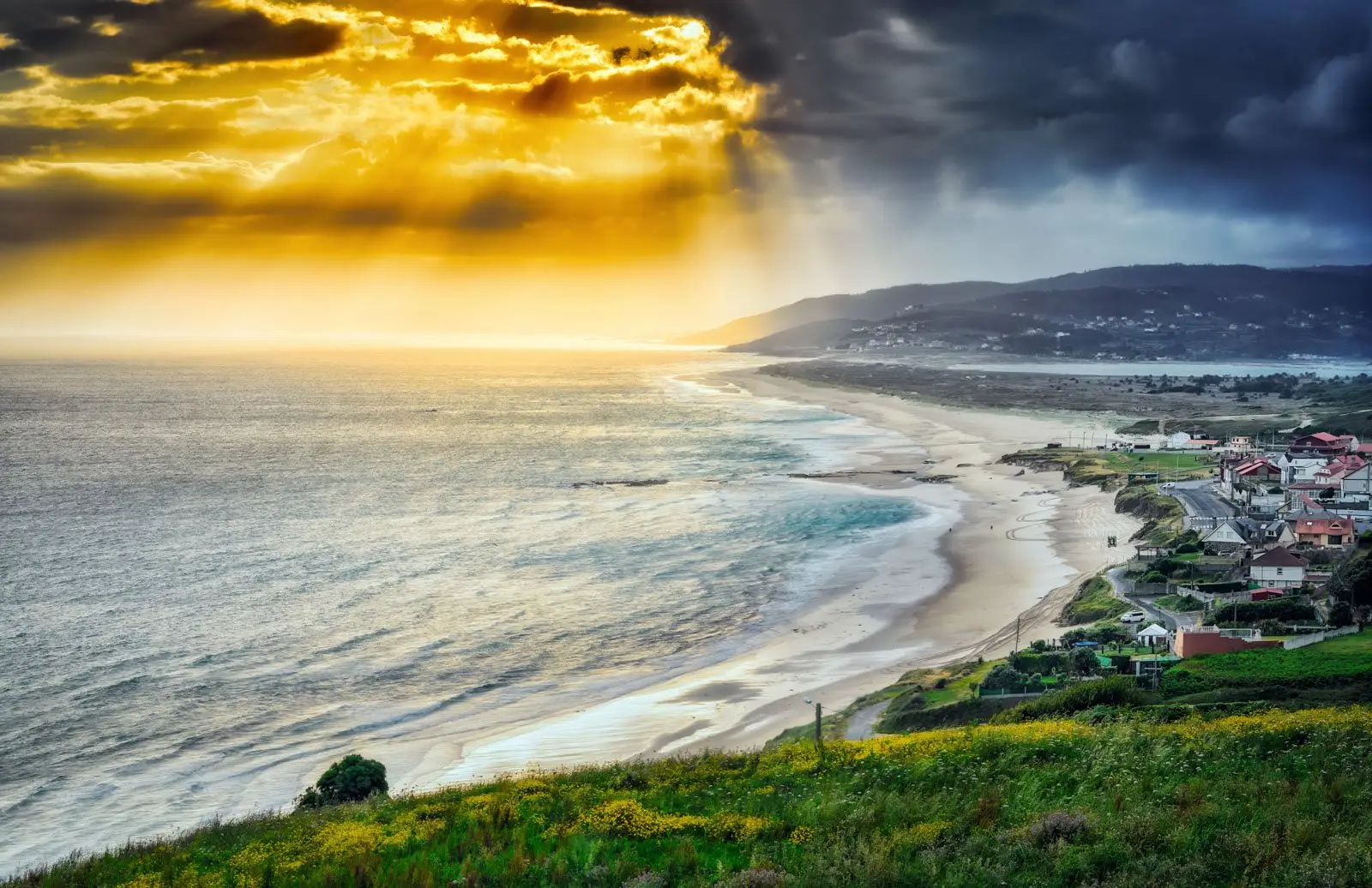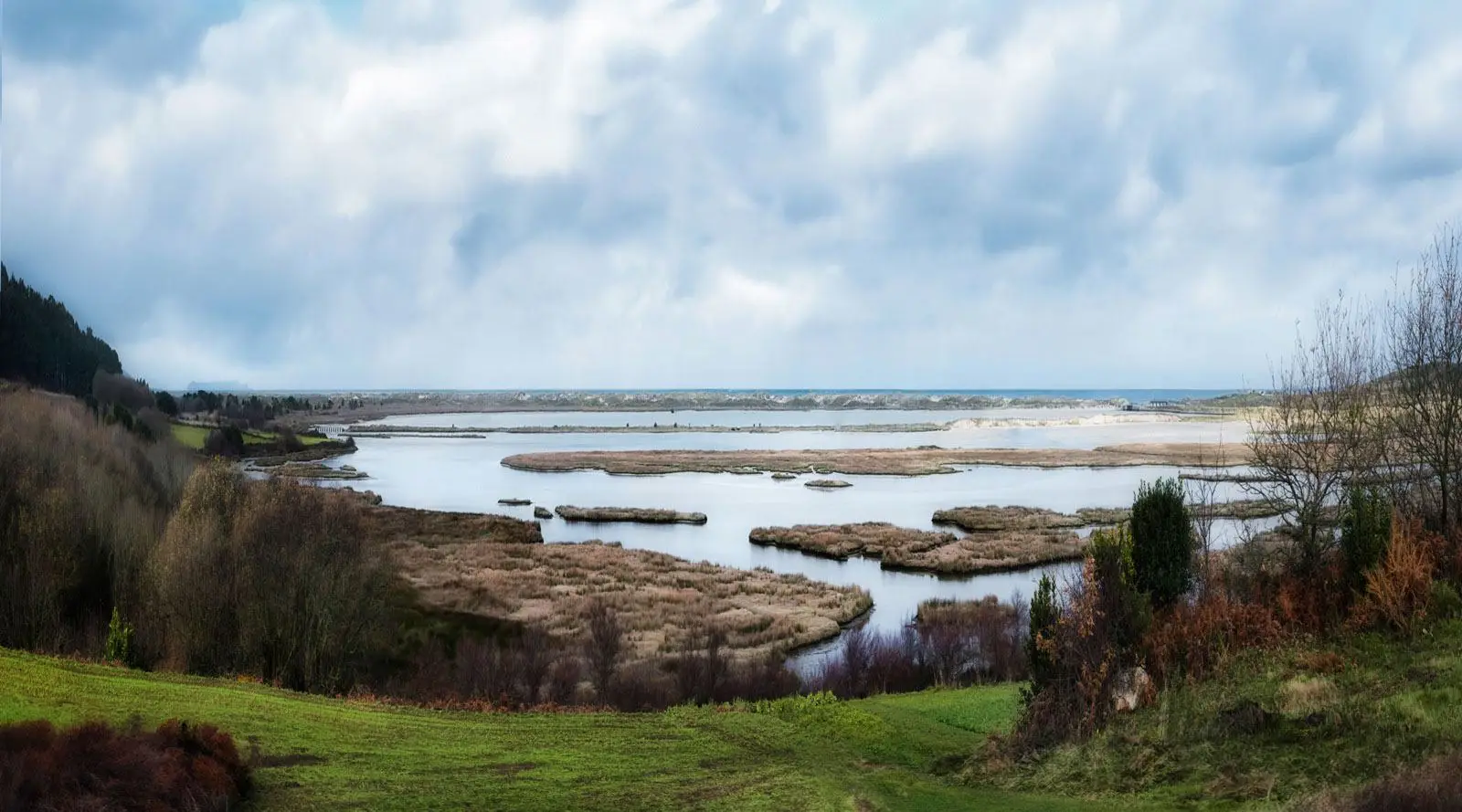


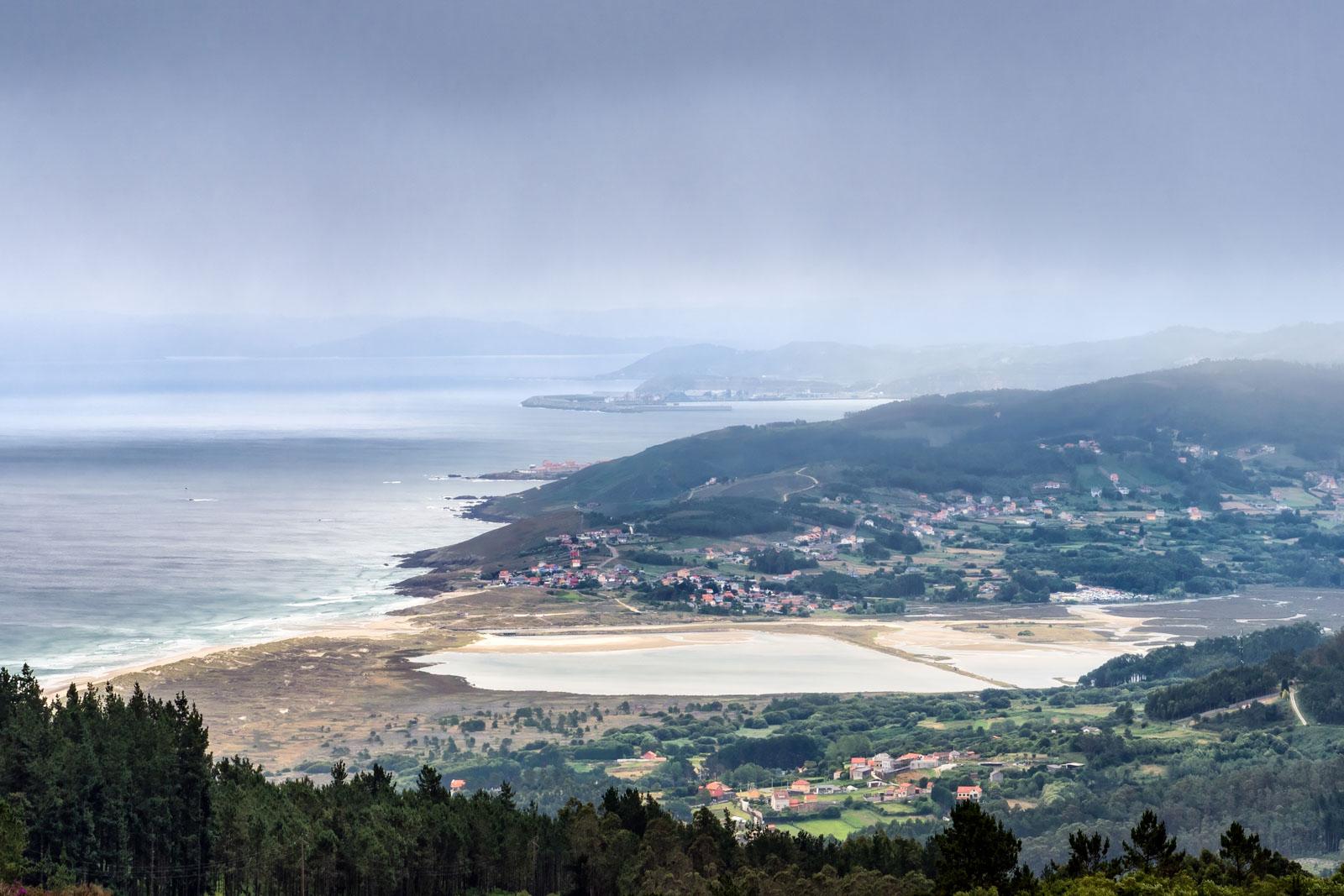
Few places on the coast of Galicia can boast a natural area with as much diversity as this one on the coast near Carballo, where hundreds of species of flora and fauna can be seen. To enjoy an excellent panorama over the whole area, there is the Castrillón lookout point, located over an old fortified settlement, from where you can see the different ecosystems in this extensive natural complex.
Its formation is due to the existence of the so-called Baldaio fault, where the land sank, creating the coastal inlet. The tall blocks correspond to the edges around the depression and the sunken area to the part that was flooded by the sea, giving rise to the bay. With the passage of time it filled with sediment carried down by the waters of the streams that flow out into the sea here. The sea currents were responsible for forming the sandy barrier that stopped the river water from flowing out and created the lagoon. This led to its natural evolution due to the accumulation of sediment on which vegetation grew, giving rise to meadows, sedgeland and a marsh, which surround the area containing water, which is constantly shrinking.
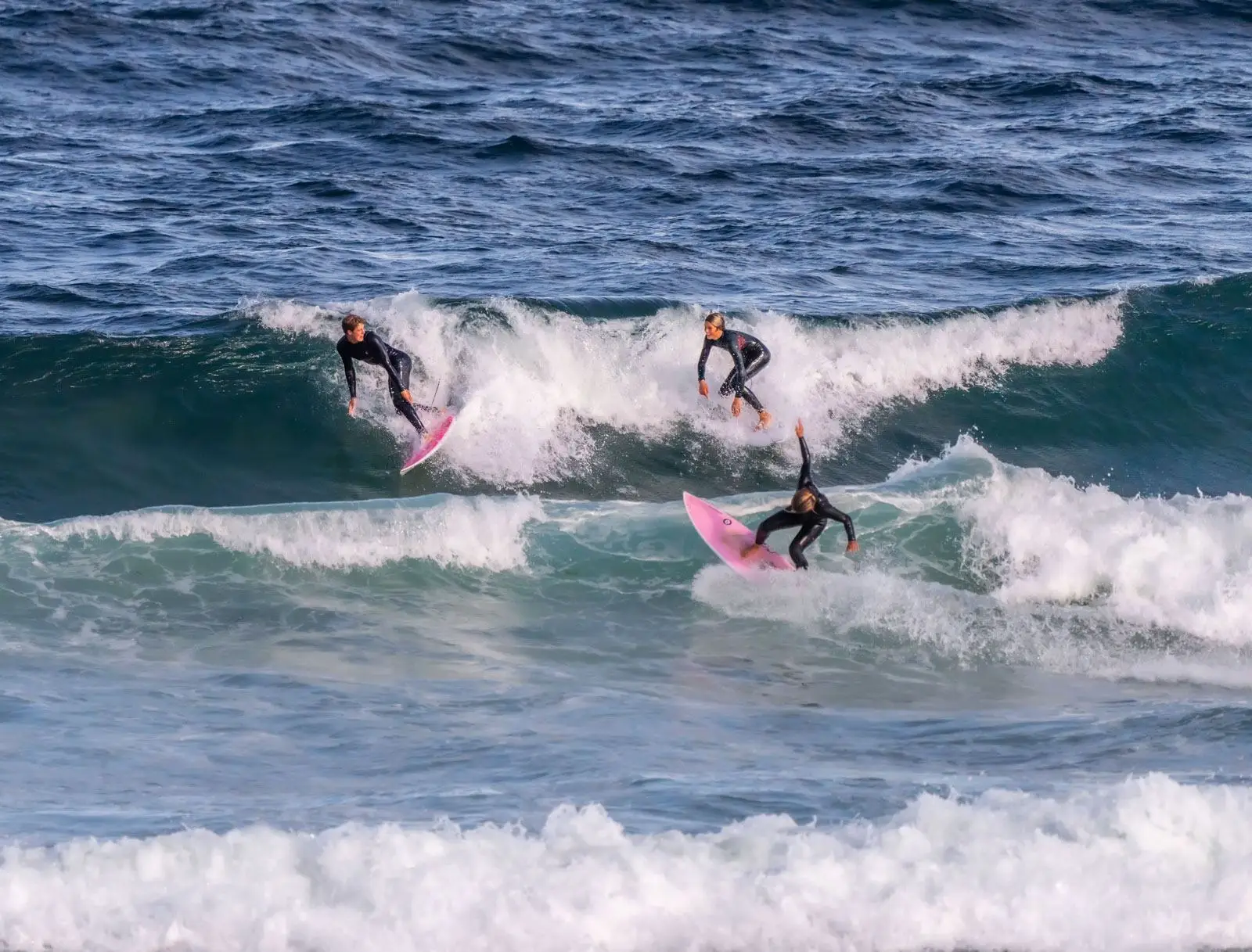
In the Razo-Baldaio natural area various habitats or biotopes can be found: beach, dunes, sedgeland, marsh and lagoon, each with its own specific fauna and flora. Of all of these, the long beach is the part that has undergone major changes because of the constant action of the tides. The open beach, more than 3 km long, and the big waves in the sea are a delight for the many surfers who come to this sandy shore. Parallel with the beach are the dunes, which range in their stability from primary, the most unstable, to tertiary, which are held in place by the vegetation growing on them.
The sedgeland is located to the west of the lagoon and is triangular in shape. Formerly, it was part of the lagoon but it dried up due to the build-up of sediment and was colonised by vegetation. In the southern part of the area is the marsh, formed from deposited mud and sandbanks, and criss-crossed by a network of canals through which the tidal waters and water from the streams that flow into the area run.
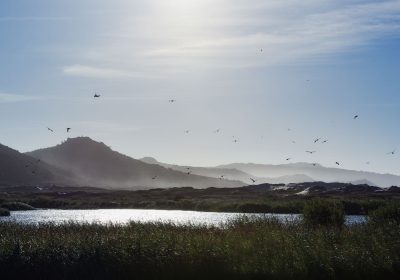
The sections furthest east of the depression is occupied by the lagoon. The amount of water varies according to the state of the tide. Various types of fish, molluscs and crustaceans live in it. Its state of preservation has been changed by human intervention. In the 1970s a track was built that divided it in two. Like almost all lagoons, this one also has its own legend, which talks of the submerged city of Galilea, whose inhabitants disappeared under the water because they refused to give shelter to Our Lord when he visited the place, accompanied by St. Miro and St. Mariña, two local deities.
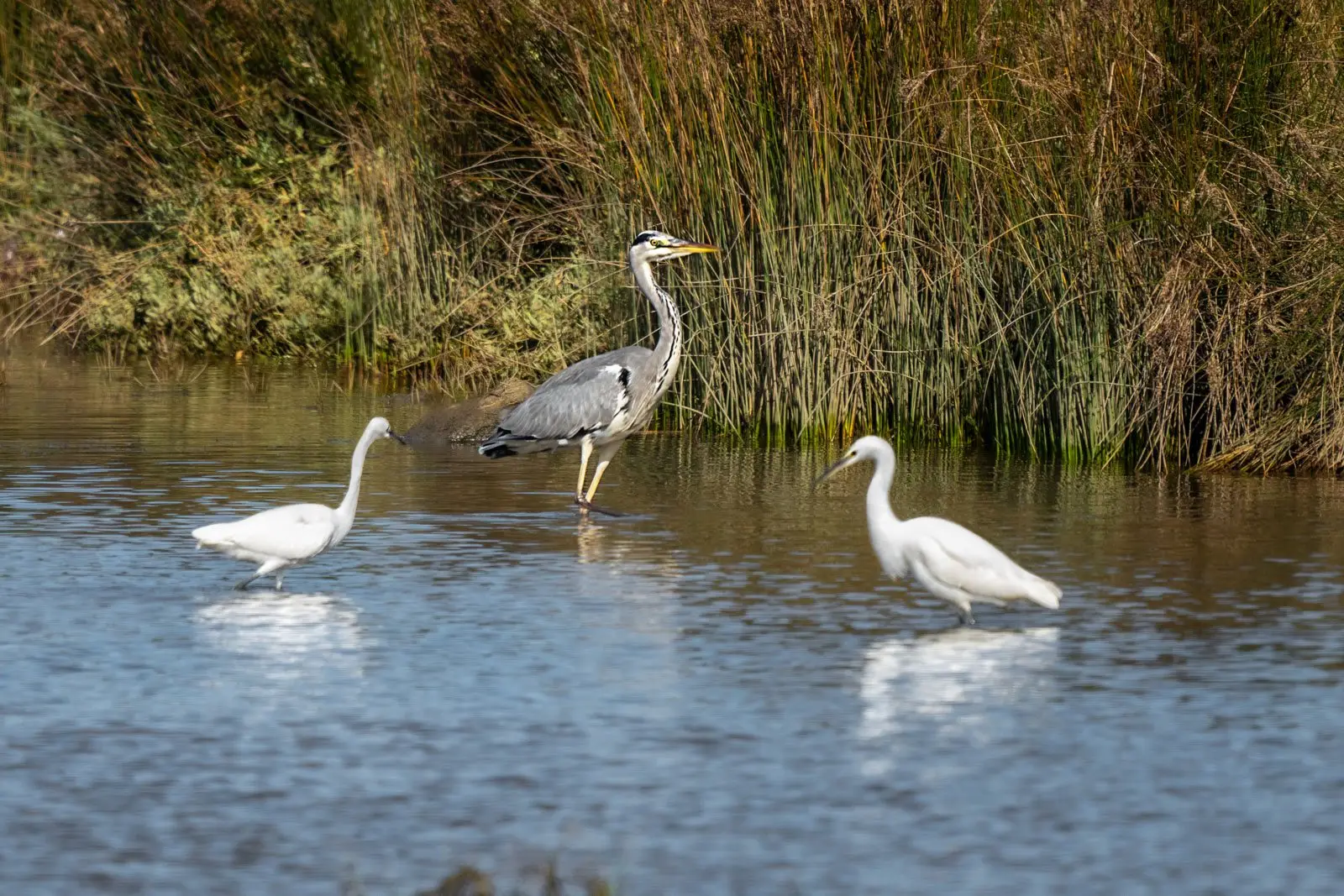
Both the lagoon and the marsh are extremely rich in nutrients, of which the local fauna takes full advantage. Between this area and the adjacent ones more than 240 different species of birds have been recorded, making Baldaio an ideal place for birdwatching.