

Many pilgrims and travellers who have come to Galicia throughout history have left accounts of their journeys, which allow us to discover their impressions of the landscape, the people and the events that they experienced on the road. Aymeric Picaud, who is accredited with being the author of the book Liber Peregrinationis (1143), one of those in the Codex Calixtinus, said, in reference to the Galician people: “They are a people that, among the other uneducated people of Spain, are most similar to our Gallic people, even if they are hot-tempered and quarrelsome.”
Other travellers were surprised on the way by events that endangered their lives, like the British bible salesman George Borrow, who was arrested when he got to Fisterra and almost faced the firing squad after being mistaken for Carlos de Borbón, the brother of King Ferdinand VII. He was released thanks to the intervention of Antonio de Traba, nicknamed The Brave Man of Finisterre, who was from Finisterre and who testified that the stranger really was English. Or, as happened to the Armenian pilgrim Martir, bishop of Azerbaijan, who came upon a Vakner, a strange wild animal, when crossing a hilly area near Marco do Couto (Os Buxantes, Dumbría), on the way to Fisterra in 1492. The scant description that this pilgrim gives of the beast makes it difficult to identify it. “I suffered many travails and weariness on that trip, on which I came upon a large number of wild and very dangerous beasts. And I encountered the Vakner, a wild animal, large and very harmful.”
The text he left was first translated into French by Antoine Jean Saint Martin and then into Spanish by Emilia Gayangos. For the French translator, the wild animal to which Martir alludes seemed to be a bull or a bear, while Gayangos identified it as being an Iberian lynx. Scholars like José Luis Pensado, Aurora Lestón and Fernando Alonso Romero do not reject the possibility that it was an imaginary or mythical animal.
The biologist Martiño Nercellas claimed to offer a new version of this mysterious animal, based on interpretations provided by previous authors and taking into account zoological aspects of certain events occurring over several centuries all over Europe. According to him it could be a wolf infected by a virus that could alter its behaviour, which, at the worst stage of infection, would act with extreme violence.
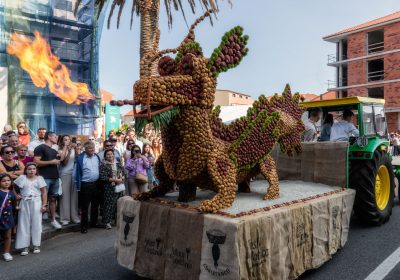
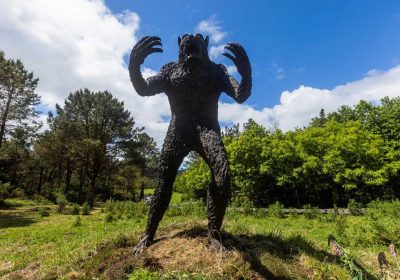
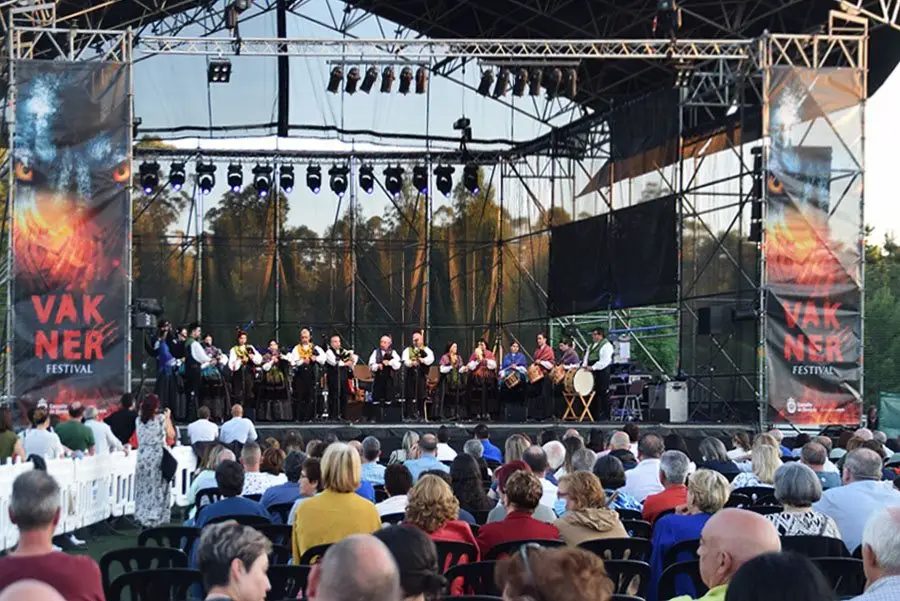
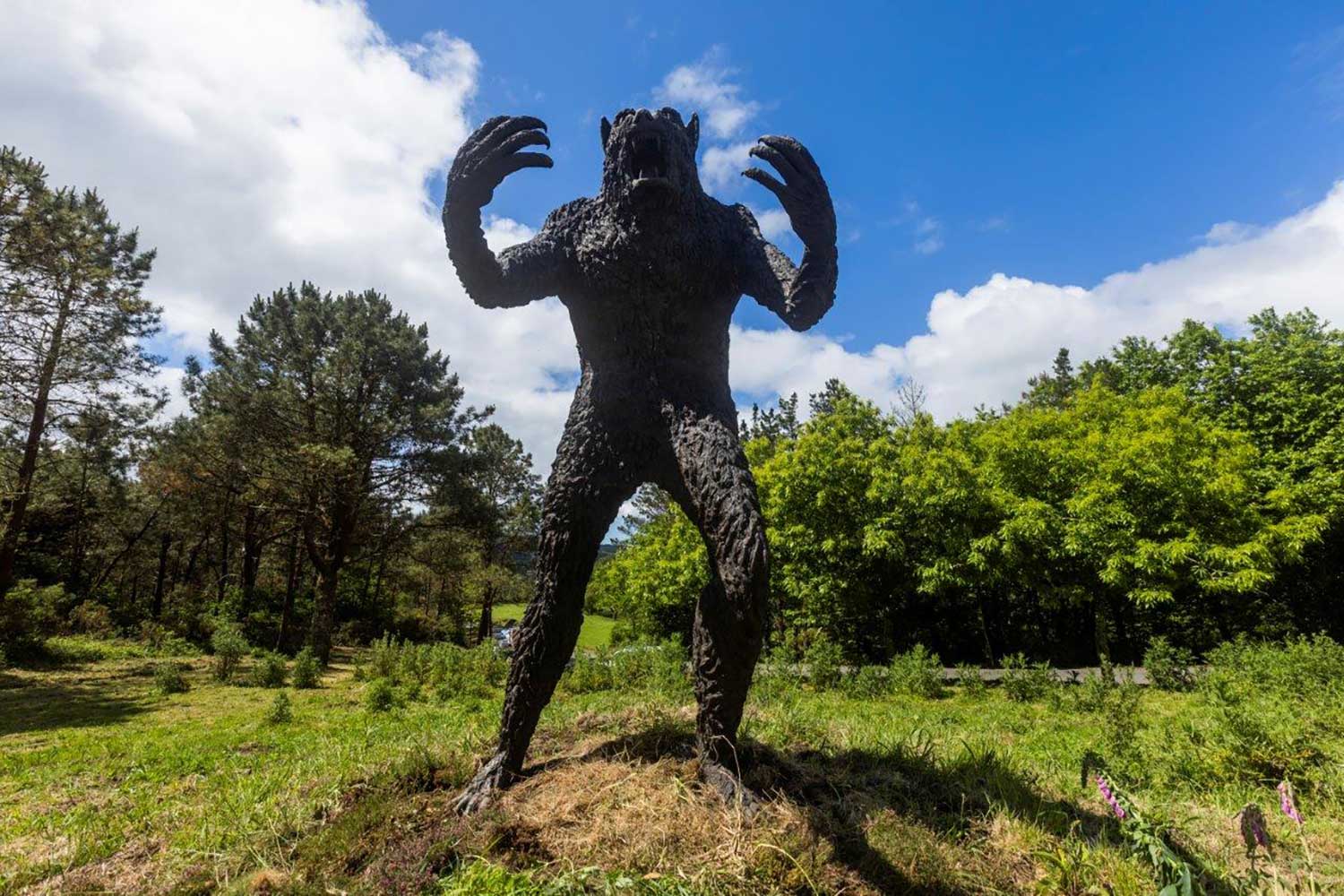
Over 500 years after this account, the Dumbria council proposed resuscitating the figure of this mysterious being to promote the Way of St. James from Fisterra to Muxía, and have a new symbol of identity and a tourist resource for the municipality. To reach these objectives, a series of events and activities was programmed in recent years, such as the organisation of an International Meeting on the Vakner Territory in October 2019, the installation of a bronze sculpture almost 5 m high of this mythical figure, the work of the artist Cándido Pazos, the holding of the Vakner Festival and the announcement of the Vakner Territory Literary Contest for schoolchildren and adults.