

No other building exists that identifies the landscape of Galicia like the hórreo, the stone granary. As soon as you go through a population centre and see a building of these characteristics, you immediately know that you are in the north-west of the Peninsula.
Throughout Galicia there is a great variety of shapes and types of stone granaries due, above all, to the type of building materials available in each area. At times their granary was a symbol and the pride of a farming family and therefore care was taken in its construction and decorative elements were added.
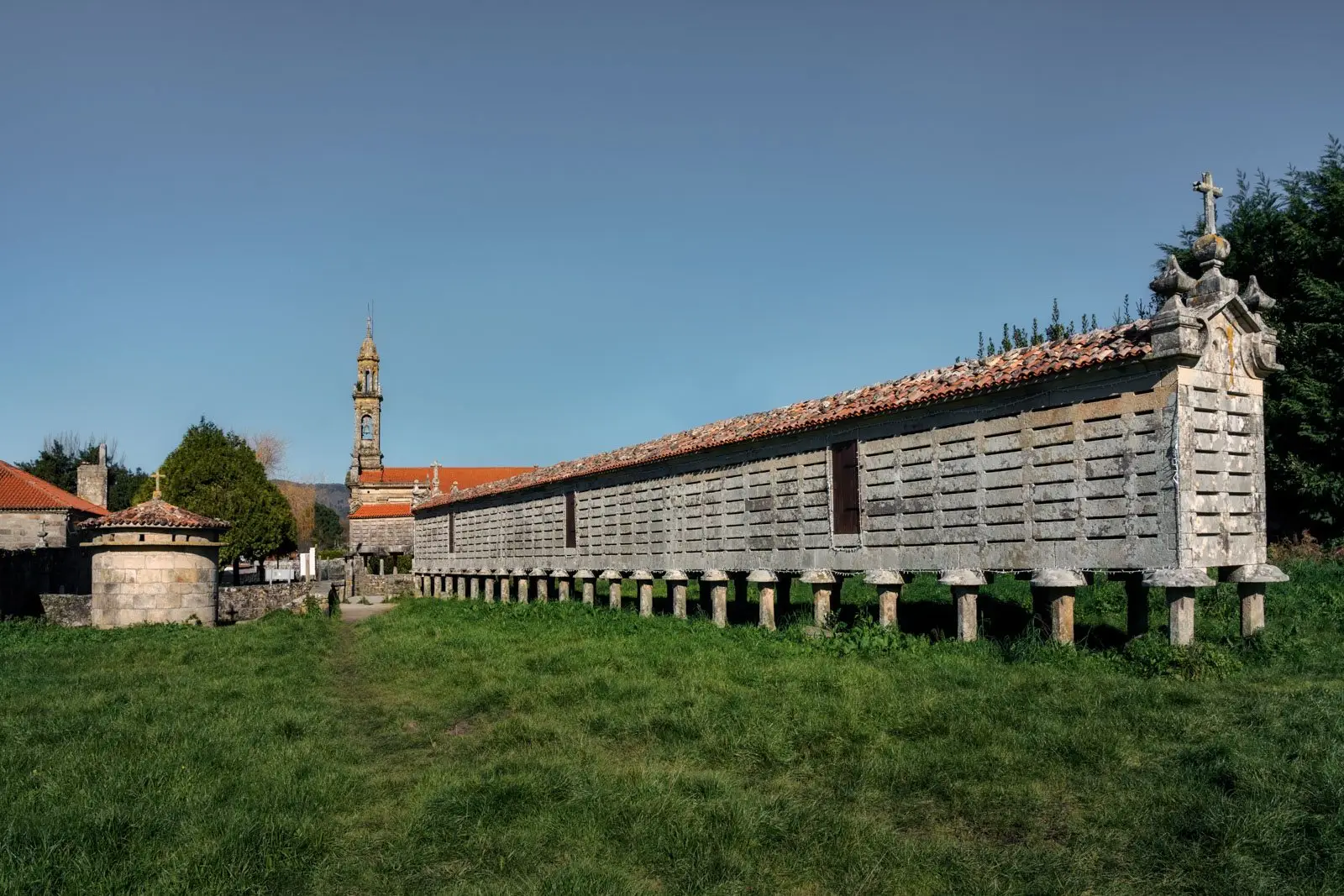
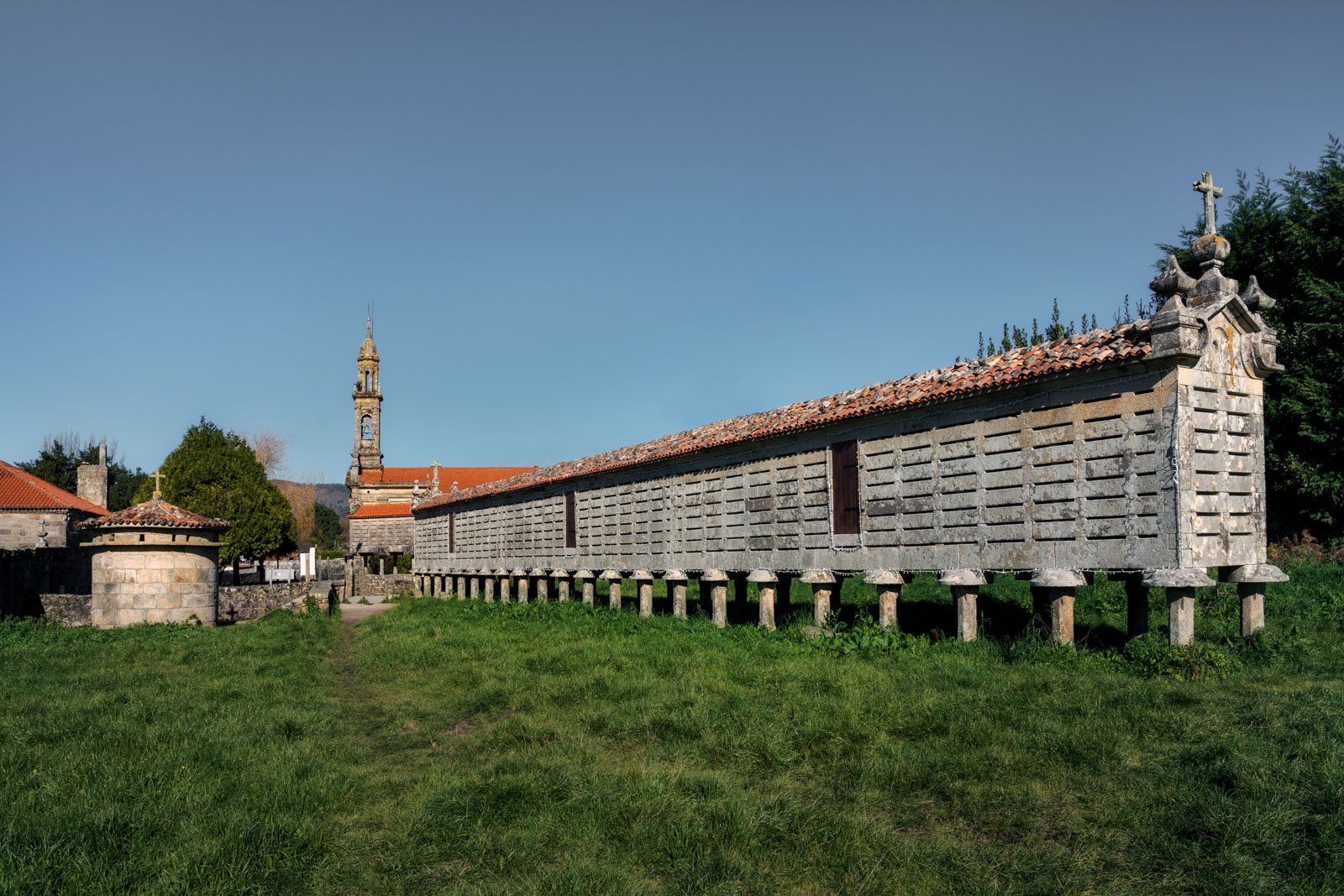
In the far west of Galicia, by Costa da Morte, is the type of stone granary that extends from the river Anllóns to the Barbanza peninsula. It is called an Atlantic or Finisterran granary. It has some common characteristics that differentiate it from other types in the rest of the country: it is built entirely of stone, is rectangular in shape and stands on tapered, cylindrical or prism-shaped legs with circular capitals, and has openings for ventilation on all four sides.
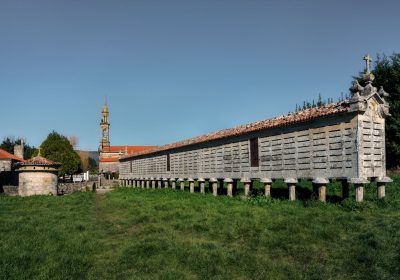
In this Atlantic region of Costa da Morte there are granaries that because of their size or architectural beauty catch the attention of visitors. The best-known and most visited is the Santa Comba de Carnota granary, the third longest in Galicia after the one in Araño (Rianxo) and its neighbour in Lira, but the one in Carnota is the most artistic and was, for this reason, declared a National Monument.
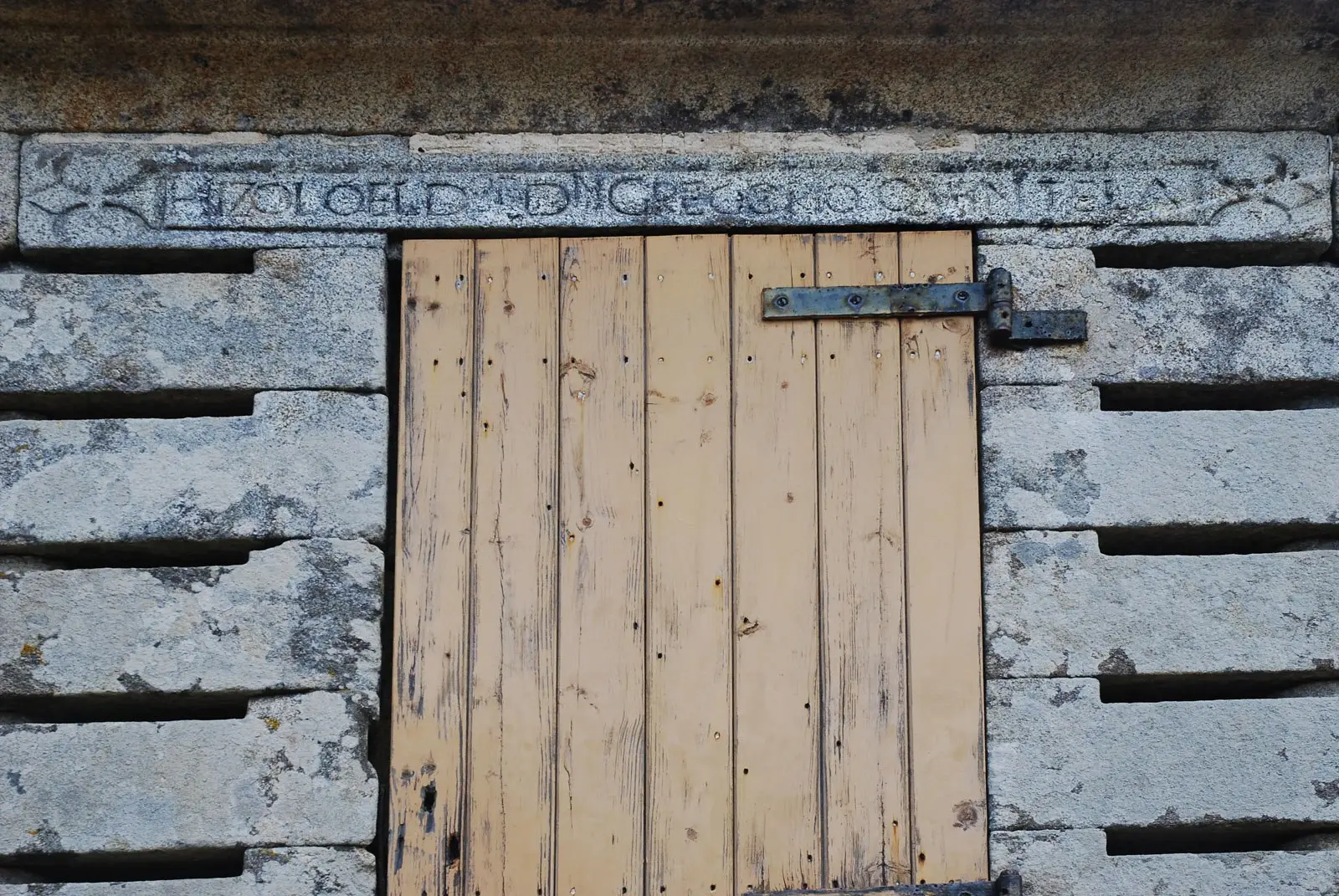
It has 22 pairs of legs and measures 30.76 m long by 1.9 m wide. The architect who designed it, Gregorio Quintela, who was aware of the value of what he was building, wanted to inscribe his name on the lintel of the first door, the date of construction (1768) on the second, and that of its expansion (1783) on the third opening.
Its chamber is covered in very regular slabs of cut stone, with openings in between for ventilation. Its three doors are located on the south-west side and the gable roof has curved tiles. The gable ends is where the baroque style decorative elements were placed: a curved line of tiles, two pinnacles on the outside edges and a cross on the ridge. The legs on which the building stands are shaped like prisms and the capitals or staddle stones are circular.
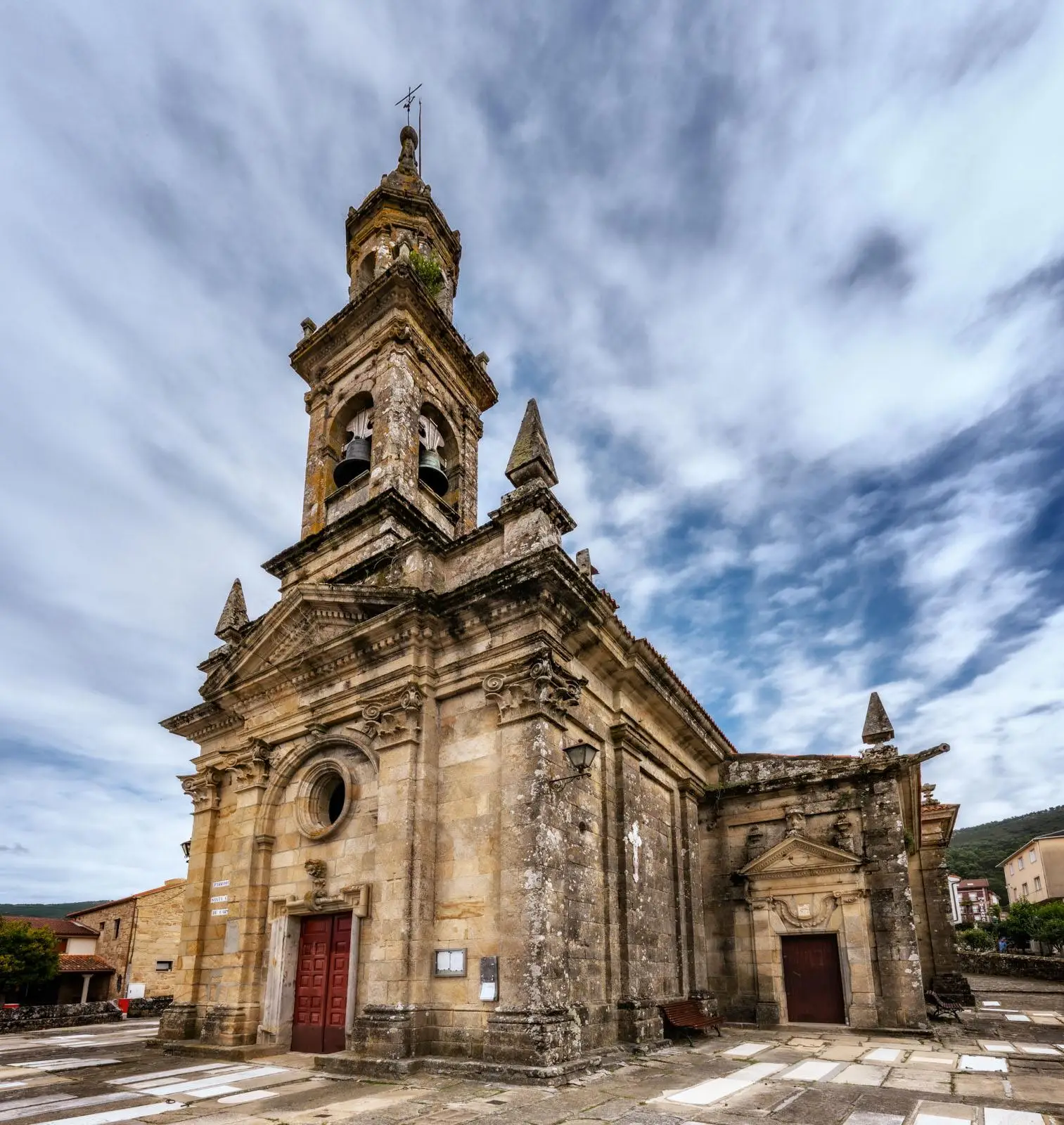
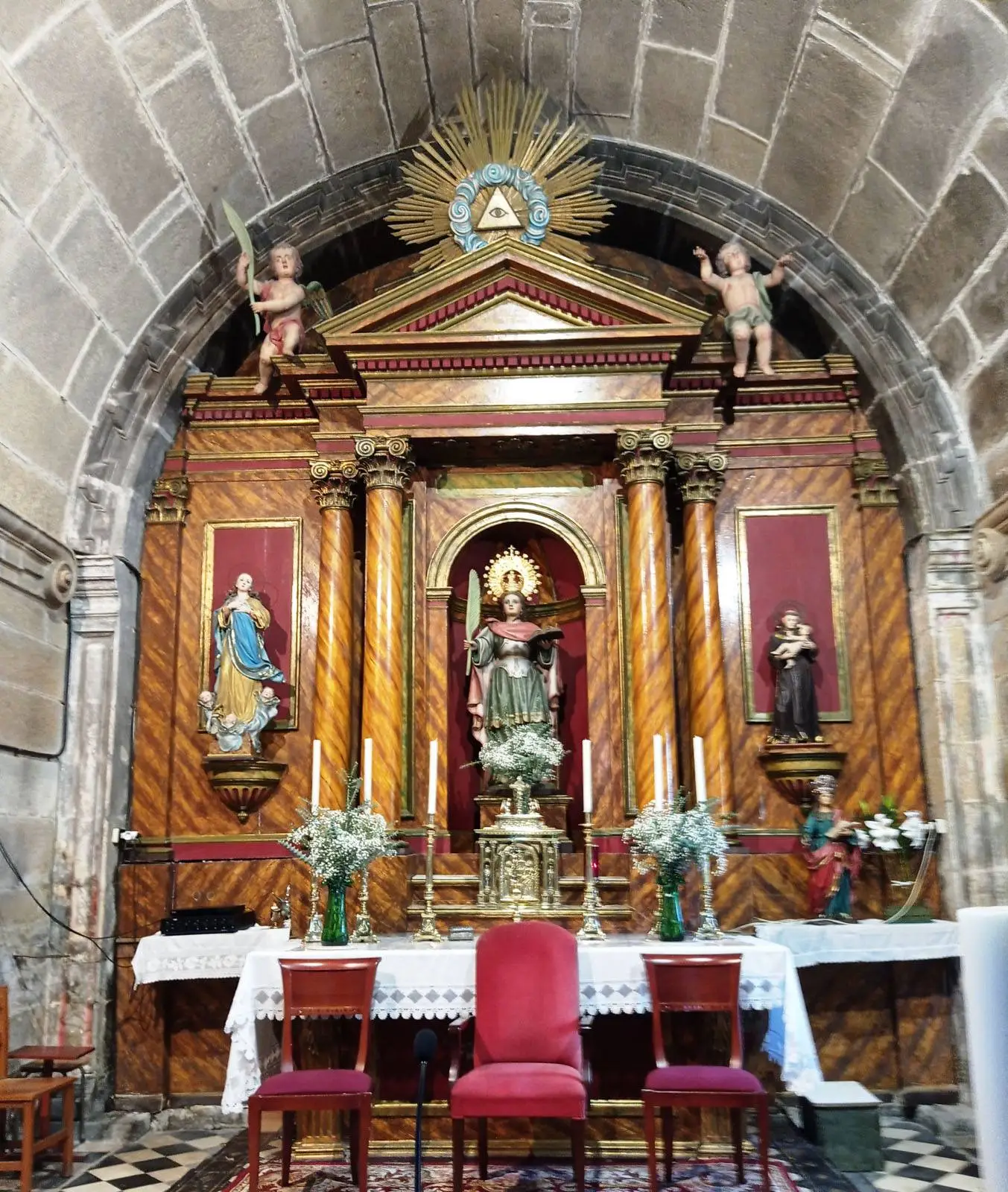
This artistic granary forms part of a charming architectural ensemble with the priest’s house and a dovecot. North of it is the parish church of Santa Comba (dedicated to the Spanish Saint Columba), a baroque building in the shape of a Latin cross, divided into three naves. It dates from 1775 and in its interior is an interesting main altarpiece in the classical style, the work of sculptor Xosé Ferreiro.
In the neighbouring parish of Santa María de Lira there is another large stone granary designed by the same architect as the one in Carnota. It has the same number of legs and is 36.5 m long by 1.6 m wide. It was built on a stone platform to compensate for the uneven ground. It is said that the parish priests of these two Carnota parishes competed over who would have the biggest granary. So, when the one in Lira was built, in 1779, the parish priest of Carnota had his enlarged. After this, his neighbour in Lira had his extended to a length greater than the one in the largest town in the municipality.