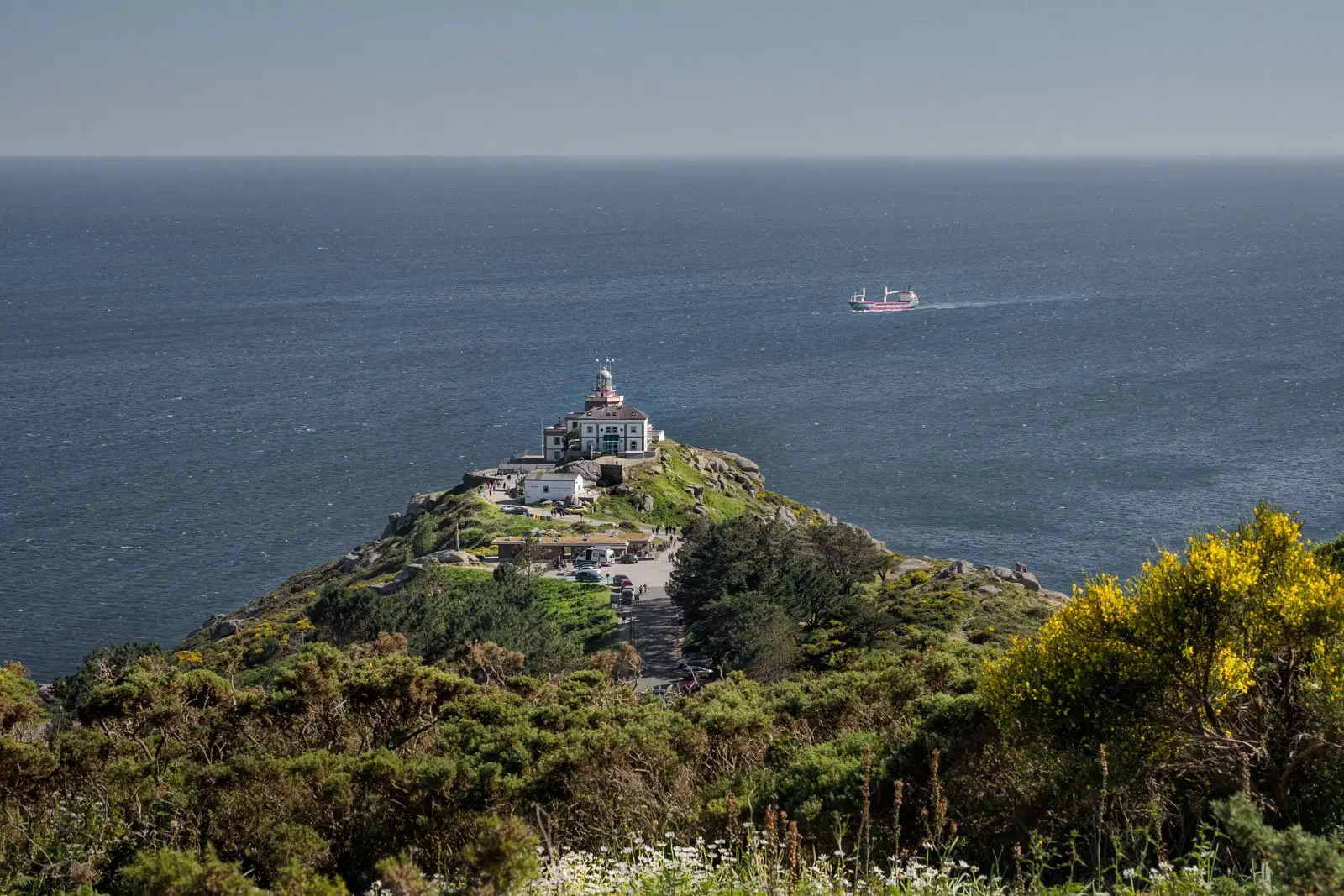


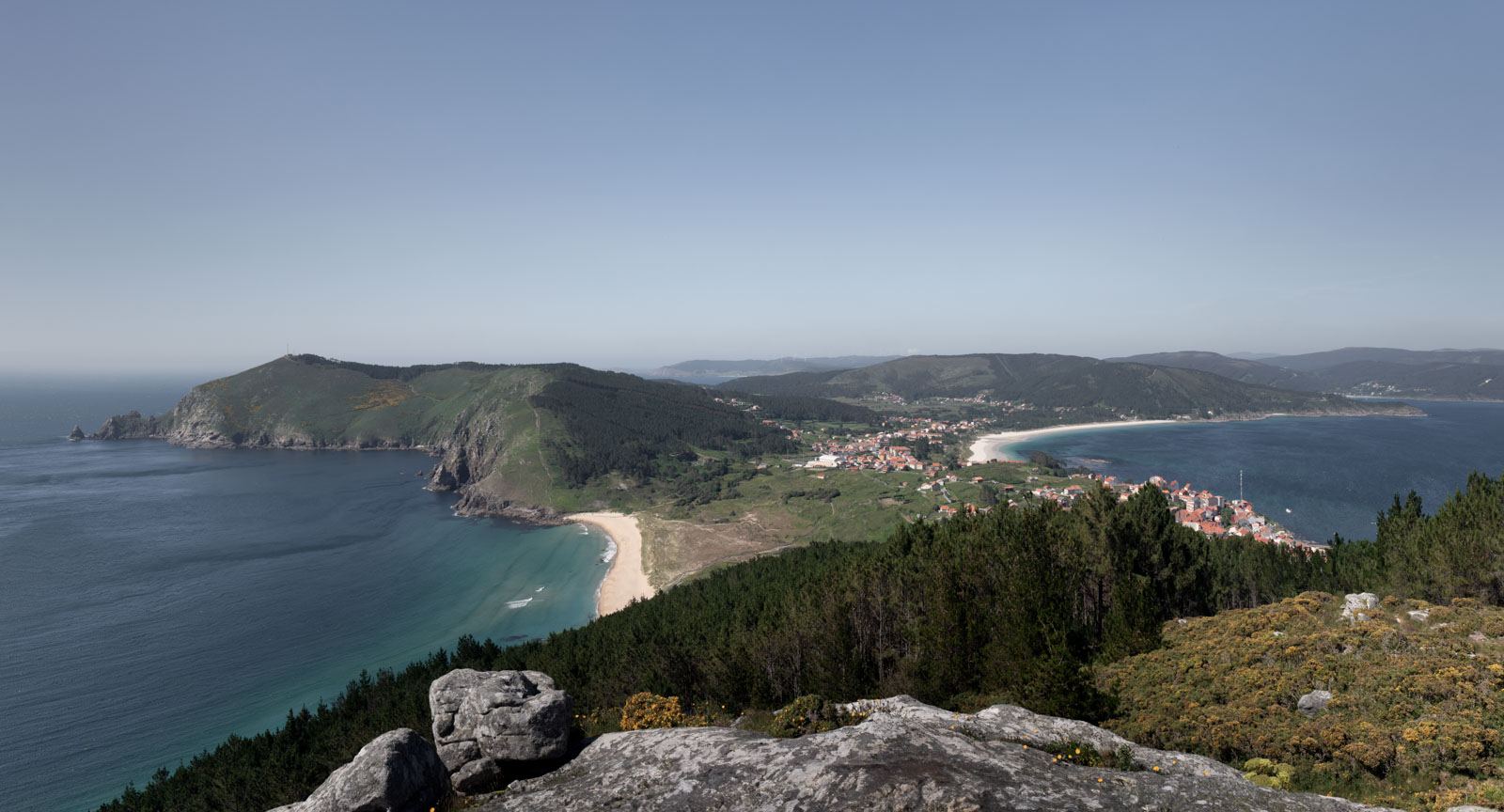
Travellers who go to cape Fisterra and look out at the sea without knowing that the American continent is over there will experience the same feeling as many other wayfarers had centuries ago when they found themselves at the end of the Earth. This same impression could also be made by other points in Galicia, such as cape Touriñán, which is very close to Fisterra; however, there had to be a reason why past people gave such a name to this cape. Could it be because cape Fisterra has a wild, dangerous coast to the north, but not to the south, where the town is located with excellent conditions for a settlement, something that does not occur, for example, with cape Touriñán?
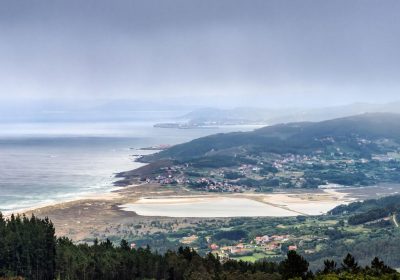
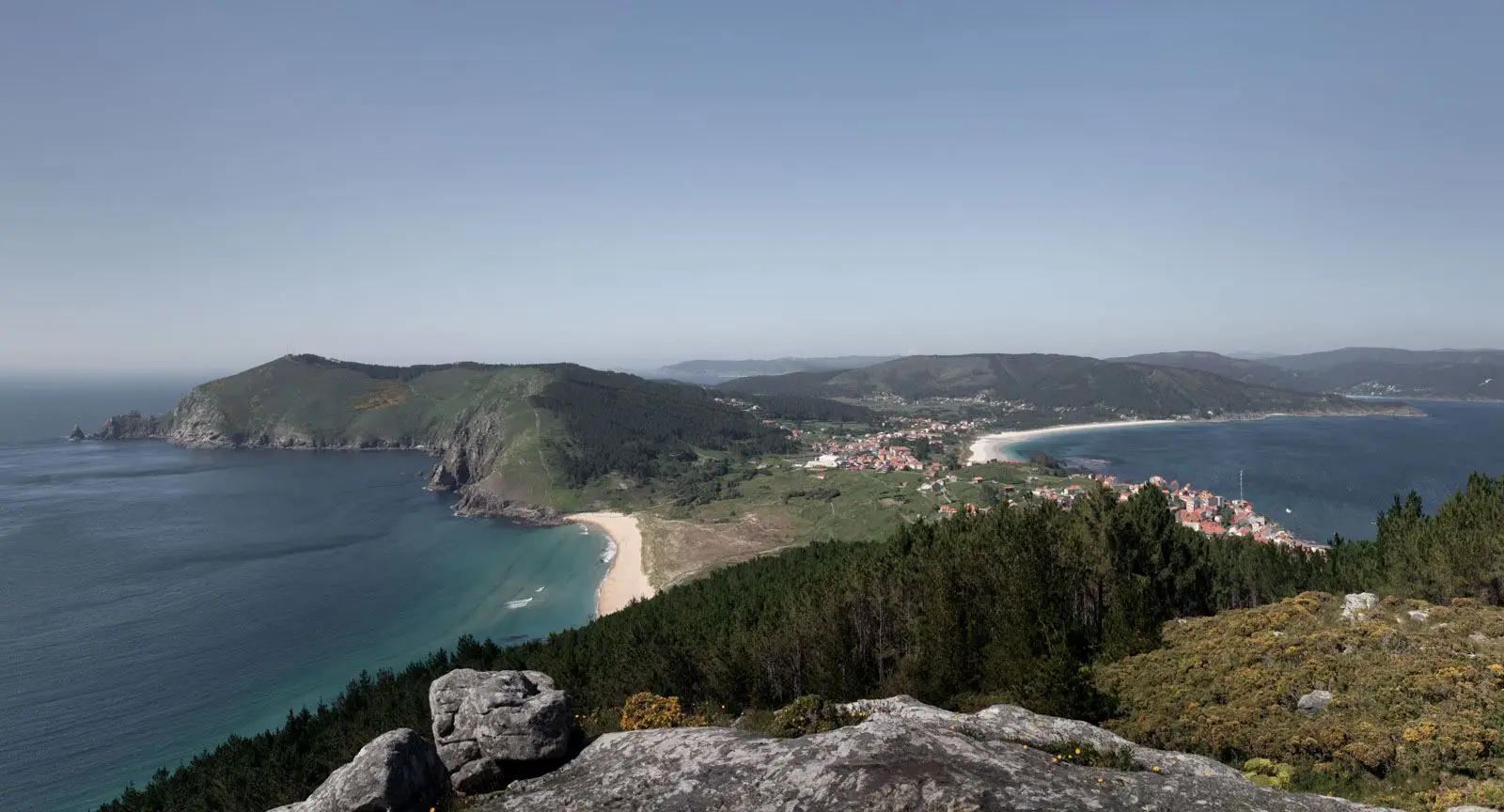
The peninsula formed by cape Fisterra sticks out some three kilometres into the sea and has two very different faces: the wild northern face, with steep cliffs, bathed by a rough sea, the so-called Mar de Fóra (Outer Sea) and the southern face, with a lower, protected coast with sandy formations that acted as natural ports in times gone by.
In their works, classical authors refer to the land of Fisterra, inhabited by the Nerii. Cape Fisterra could correspond to the Nerius or Celtic promontory, according to these sources. In the Middle Ages, Fisterra was linked with the Way of St. James by the legend that tells of the transfer of the remains of the Apostle James to Galicia as recorded in the Codex Calixtinus, which mentions the legendary city of Duio.
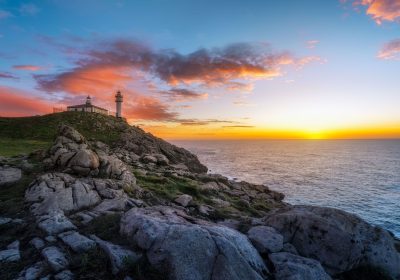
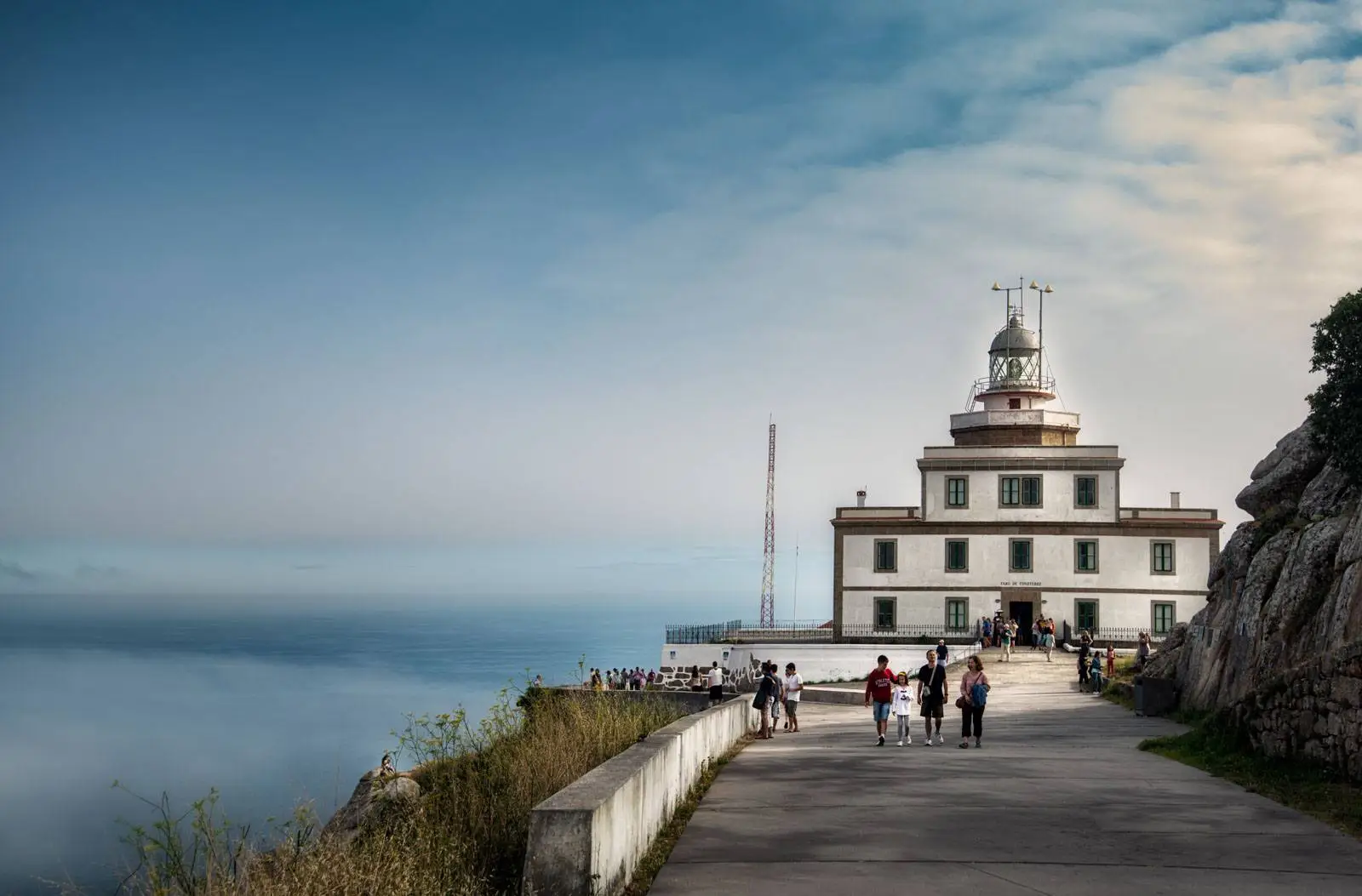
In the extreme south of cape Fisterra is the lighthouse, a building designed by the engineer Félix de Uhagón, which started operating in 1853. It consists of a rectangular, two-storey building with three floors in the central section and plaster walls painted white, except for the edges of the openings and the corners, where there is bare stonework. At the back was the octagonal tower, on which the light sat. Its beam had a range of 31 miles. The foghorn building (1889) was built further south, with two foghorns projecting from it that emitted very loud sounds when there was fog. It was popularly known as the Vaca de Fisterra (the Fisterra Cow).
To the north of the lighthouse is the semaphore building, which served as a station for issuing maritime signals and started operating in 1883. After being remodelled by the architect César Portela, it was used by the hospitality industry.
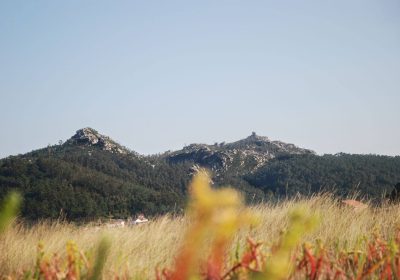
On the peninsula of cape Fisterra, which is filled with history and legends, there are two places of great interest to visitors: Monte Facho and the ruins of the chapel of San Guillerme (dedicated to Saint William). To get to the top of Monte Facho, take an asphalt track that turns to the right before the lighthouse. This hill takes its name from the beacon fires that used to be lit to warn of the arrival of suspected pirate ships. On its peak was the enigmatic Orcavella tomb, which might have been an ancient dolmen that gave rise to the legend of this mythical centuries-old woman; it is also the location of the Pedras Santas, Sacred Rocks, two large round boulders on which the Virgin is said to rest.
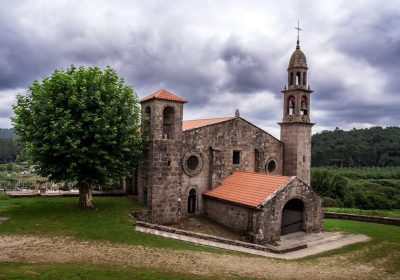
At the foot of the hill, a trail to the left leads to the ruins of the chapel of San Guillerme. From here, you can enjoy impressive panoramas over Fisterra and the surrounding area. No information exists on when this hermitage was founded, but there is evidence that it was an important place of pilgrimage during the Middle Ages.