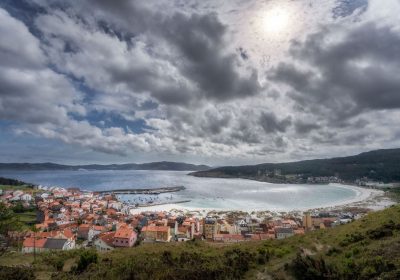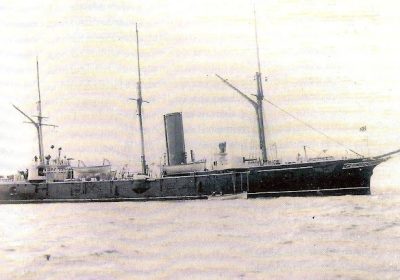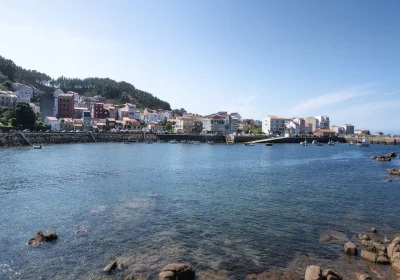


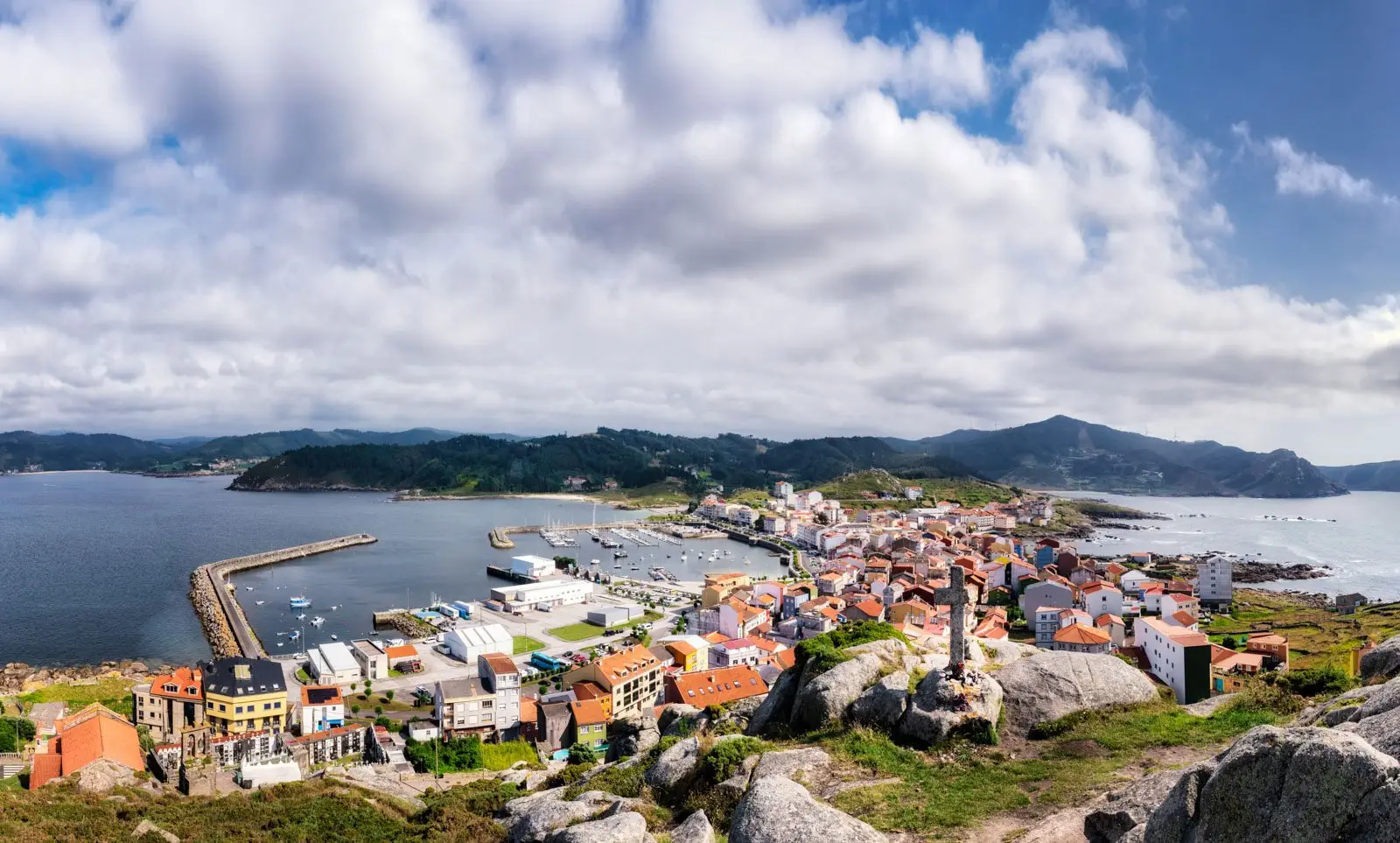
The poet Gonzalo López Abente (1878-1963) considered his native Muxía to be static, “lying” on the river bank, silent and melancholy, looking up at the sky. But he could also have imagined it in movement, sailing on a majestic ship with its prow on the Barca Point, its stern on Monte do Enfesto and Monte Corpiño as its wheelhouse.
In reality, Muxía is a town with a long history linked to the monastery of San Xulián de Moraime (dedicated to Saint Julian), which ruled over the peninsula on which it stands. The very name of the town comes from this religious community, which was founded in the Middle Ages.
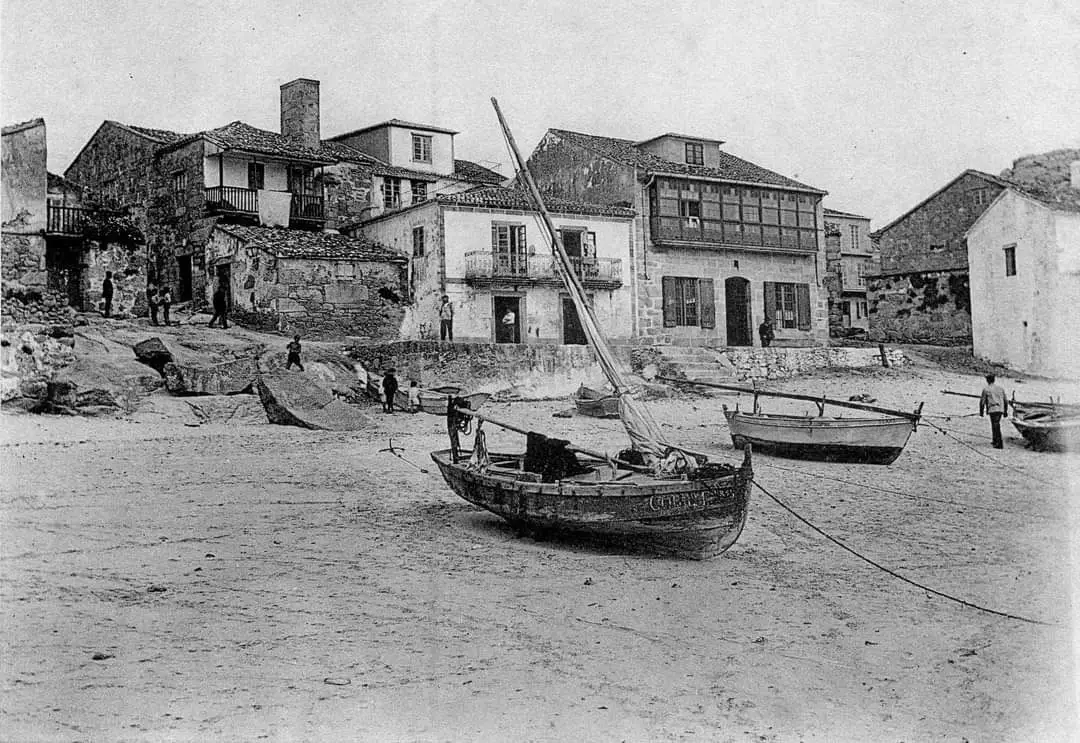
King Alphonso XI granted the port of Muxía the charter of A Coruña, which permitted its neighbours to enjoy certain rights on the condition of respecting the privileges that the monks of Moraime had over the town. It should be noted that the territory of the people of Muxía was very small, with no possibility of agriculture or of supplying themselves with water or firewood, so that they depended on Moraime to obtain such basic elements. Fishing was the only recourse for the first settlers who dared to build the first houses at the foot of Monte Corpiño.
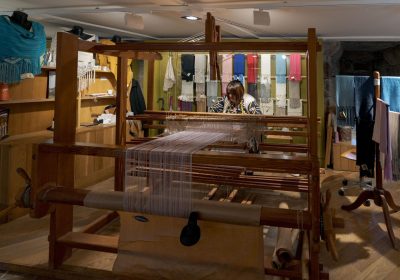
In later centuries, the life of the people of Muxia continued to be linked to the sea, especially sardine and conger eel fishing. From the 18th century on, lace making had some importance for the number of women who made it and for the families that sold it.
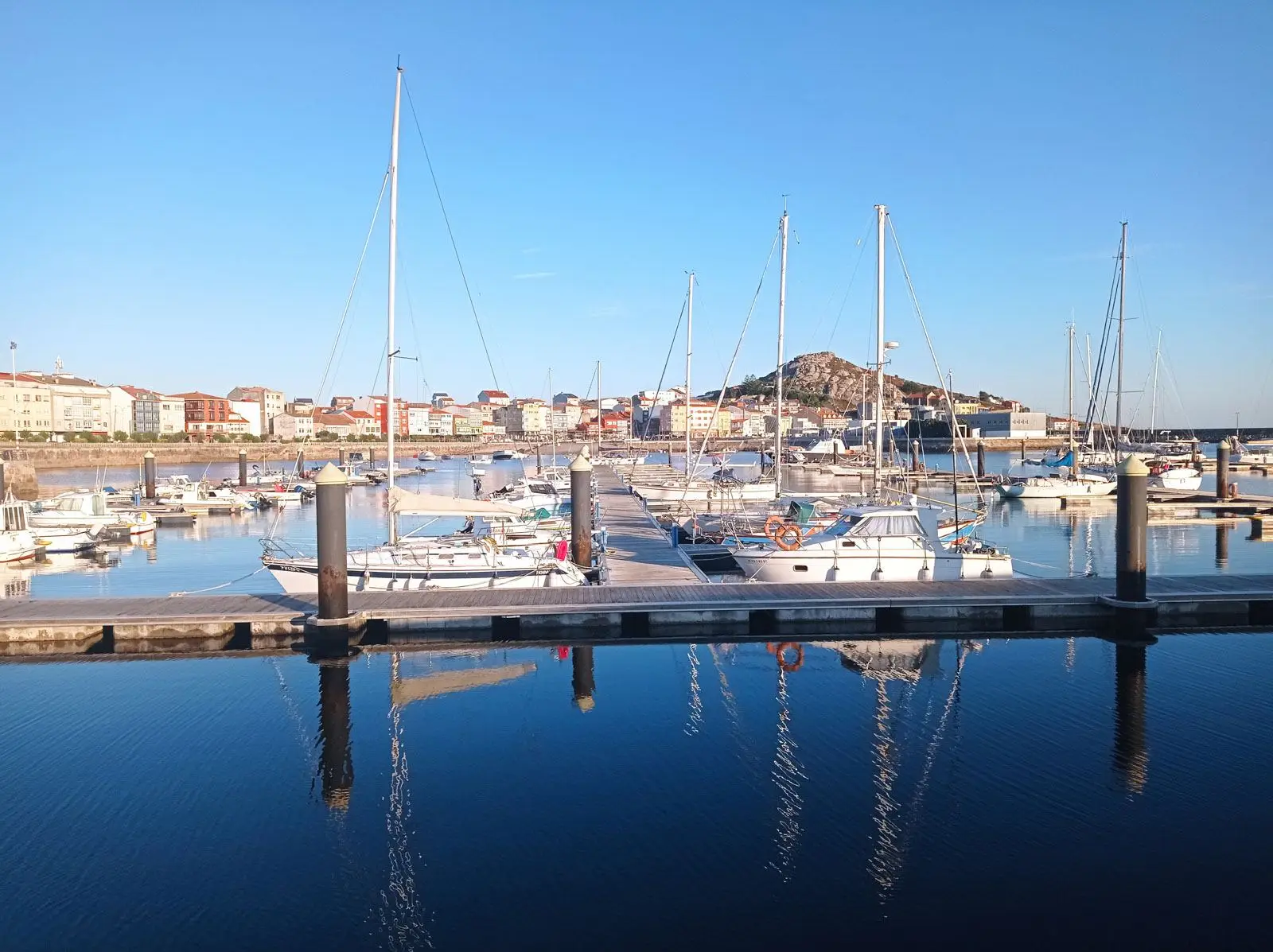
In the first few decades of the 20th century, Muxía was a small town with around a thousand inhabitants, with a centre that extended from the parish church south to Cabo da Vila square. The sea continued to be its way of life, supplemented by exporting lace to Latin American countries. The discovery of the Canto fishing grounds at the end of the 1970s led to a very noticeable improvement in the finances of the fishermen’s families and permitted the renovation of the fishing fleet and the urban development of the town. The seafront also changed, with the construction of a sea wall, a promenade and a marina. All these changes altered present-day Muxía. The fishing industry has lost its importance and tourism is becoming the main economic activity, attracted by the Way of St James and the landscape and historical resources offered by this fishing town.
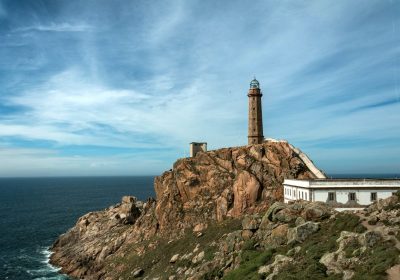
The Barca cape is the main attraction for visitors. Here are concentrated the most interesting heritage assets, such as the sanctuary of the Virxe da Barca (dedicated to Saint Mary), an 18th-century baroque building, and the Abalar and Cadrís rocks, associated with the legend of the arrival of the Virgin, who appeared to the Apostle James in this place. For this reason, Muxía represents, together with Fisterra, the end of the Way of St James that runs from Santiago de Compostela to the most westerly part of Galicia.
The town of Muxía also offers visitors other places of interest, such as the parish church of Santa María, a magnificent Gothic building with attractive altarpieces; Monte Corpiño, the best vantage point for looking out over the town and surrounding area; and the town centre, which still has some streets and squares with houses from Muxía’s past.